
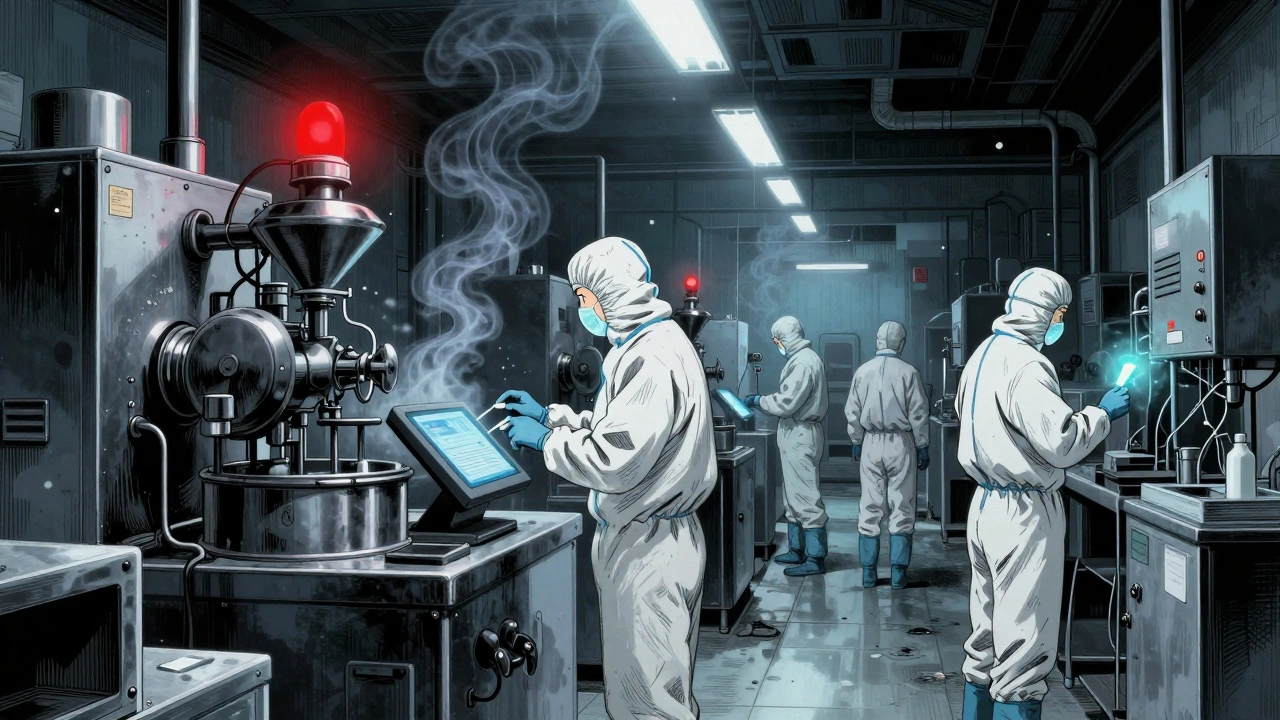
When you take a generic pill, you expect it to work just like the brand-name version. But behind that simple tablet is a complex battle against invisible threats-dust, microbes, chemical residues-that can turn a life-saving medicine into a dangerous one. Contamination control isn’t just a regulatory checkbox; it’s the line between a safe drug and a public health crisis.
Why Contamination Matters More in Generics
Generic drug makers don’t have the luxury of brand loyalty or massive R&D budgets. They compete on price. That means tighter margins, shared equipment, and higher pressure to keep production running. But here’s the catch: the same machines that make your blood pressure pill might have made a cancer drug the day before. If cleaning isn’t perfect, traces of that powerful drug can stick around-and end up in your medicine. The FDA defines a drug as adulterated if it’s made under unsanitary conditions that could make it harmful. In 2022, nearly 4 out of every 10 warning letters sent to drug manufacturers were about contamination. That’s not a small number. That’s a pattern. Take the 2020 Valsartan recall. A chemical impurity called a nitrosamine slipped into blood pressure meds made by 22 companies worldwide. The result? Over a billion dollars in lost product, millions of pills pulled from shelves, and patients left wondering if their medicine was safe. This wasn’t a one-off. It was a warning.What Exactly Are We Fighting Against?
Contamination comes in three main forms:- Chemical: Leftover drug residue from previous batches. Even a few parts per million of a potent cancer drug in a cholesterol pill can be dangerous.
- Microbial: Bacteria, mold, or yeast that grow in damp corners, dirty equipment, or on unwashed hands. These can spoil a batch or cause infections in vulnerable patients.
- Particulate: Dust, fibers, or metal flakes from clothing, air, or machinery. These don’t always harm you-but they signal that something’s wrong with the environment.
How Clean Is Clean Enough?
Manufacturing facilities aren’t just clean rooms-they’re engineered systems designed to keep contaminants out. Here’s how they work:- ISO Class 5 (Grade A): The cleanest zone, used for filling sterile injectables. Air here has no more than 3,520 tiny particles per cubic meter. That’s like having only 3 or 4 dust specks in a large living room.
- ISO Class 7 and 8: Less critical areas, but still tightly controlled. Air changes happen 20 to 60 times per hour. Think of it like a powerful air purifier running nonstop.
- Pressure differentials: Air flows from clean areas to dirty ones. If you open a door, air doesn’t rush in-it rushes out. That keeps dust and microbes from sneaking into clean zones.
Old Methods vs. New Tech
For years, factories relied on manual swabbing and lab cultures that took 5 to 7 days to give results. By then, hundreds of pills might have been made-and possibly contaminated. Now, real-time monitoring is changing the game:- ATP bioluminescence: A swab that glows if dirt is present. Results in 5 minutes, not 5 days. It’s 95% as accurate as traditional lab tests.
- Real-time particle counters: Devices like the MetOne 3400+ watch the air constantly. One study found these systems cut contamination incidents by 63%. Manual checks missed 78% of short-lived contamination events.
- Color-coded equipment: Red tools for one drug, blue for another. Simple, visual, and reduces mix-ups by 65%.

Human Error Is the Biggest Risk
Technology helps, but people still cause most problems. A 2023 study of 217 generic manufacturers found that 47% of contamination events came from human error. What does that look like?- Someone forgets to change gloves between batches.
- A worker skips a step in cleaning because they’re rushed.
- A gowning procedure isn’t followed because it’s hot and uncomfortable after 8 hours on shift.
Cost vs. Risk: The Big Debate
Not every generic drug needs a $2 million cleanroom. A vitamin B12 tablet isn’t the same as a chemotherapy agent. That’s why experts like Dr. Paul Garmory warn against over-engineering. The key is risk-based thinking. ICH Q9, a global standard for quality risk management, says: assess the danger, then match your controls to it. - High-potency drugs? Use segregated lines, dedicated HVAC, and advanced monitoring. - Low-risk generics? Focus on good cleaning, training, and visual controls. One company saved $2.8 million a year by not installing ULPA filters on a low-risk line. They used HEPA filters instead-still 99.97% effective-and redirected the money into staff training. Their contamination rate dropped.The 2025 Deadline That’s Coming Fast
In September 2023, the FDA released new draft rules requiring all generic drug makers to set health-based exposure limits (HBELs) for every product by 2025. This means knowing exactly how much of a previous drug residue is safe in your current batch. The cost? Around $1.2 million per facility to implement. For small companies, that’s a huge burden. But the cost of not doing it? A shutdown. A recall. A permanent loss of trust. A 2023 Deloitte report found that only 37% of small facilities use real-time monitoring. The rest are still using manual methods. That’s a ticking clock.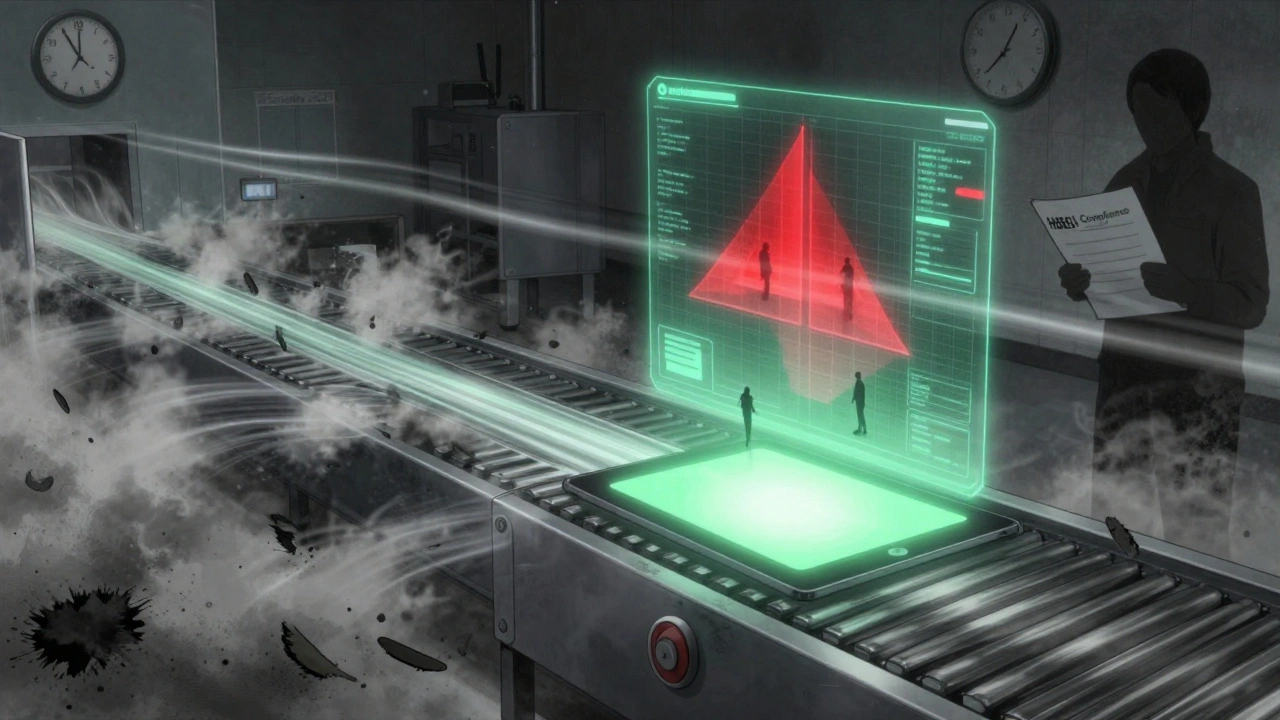
What Works Today
Here’s what leading generic manufacturers are doing right:- One batch at a time: Instead of running multiple products on the same line, they do one batch, then fully clean before the next. This cuts cross-contamination by over 50%.
- Staggered shifts: No one enters or exits the clean area during peak times. Reduces traffic and dust.
- Continuous monitoring: Not just for air. Some now monitor humidity, temperature, and even employee movement with sensors.
- AI prediction tools: Honeywell’s Forge Pharma system analyzes data from sensors and predicts contamination risks before they happen. In a Merck pilot, false alarms dropped by 68%.
Where the Industry Is Headed
The future of contamination control isn’t just about cleaning-it’s about predicting, preventing, and automating. - Waterless cleaning technologies are cutting utility costs by 22%. - ICH Q13 guidelines for continuous manufacturing are integrating contamination controls directly into production design. - Sustainability is becoming a driver: less water, less waste, less energy. But the biggest shift? The mindset. It’s no longer about testing the final product to find contamination. It’s about designing the whole process so contamination can’t happen in the first place. That’s what the FDA means when they say end-product testing is a violation. If you’re relying on the last test to catch a problem, you’re already too late.Final Thought: Safety Isn’t Optional
Generic drugs make up 90% of all prescriptions in the U.S. They’re affordable. They’re essential. But affordability shouldn’t mean compromised safety. The tools, standards, and knowledge to prevent contamination exist. What’s missing is consistent execution. The companies that win aren’t the ones with the biggest budgets. They’re the ones who treat every step-from gowning to cleaning to monitoring-as a line of defense. Because when it comes to your medicine, you don’t want to hope it’s clean. You want to know it is.What is the main goal of contamination control in generic drug manufacturing?
The main goal is to prevent any harmful substances-chemical residues, microbes, or particles-from entering the final drug product. This ensures the medicine is safe, effective, and meets regulatory standards like CGMP. Contamination can make a drug ineffective or dangerous, so controls are built into every step of production, from facility design to cleaning procedures.
How do generic drug manufacturers prevent cross-contamination?
They use a combination of physical separation (dedicated lines, airlocks), strict cleaning validation (proving residue is below 10 ppm), environmental controls (HEPA/ULPA filters, pressure differentials), and operational rules like color-coded equipment and one-batch-at-a-time production. Risk assessments based on ICH Q9 help determine how strong the controls need to be for each product.
What are the most common causes of contamination in generic drug plants?
Human error is the top cause, accounting for nearly half of all incidents. This includes improper gowning, skipping cleaning steps, or fatigue during long shifts. Equipment cleaning failures and contaminated raw materials are the next biggest issues. Studies show that 68% of generic manufacturers had at least one batch rejected due to contamination in the past year.
Are real-time monitoring systems worth the cost?
For medium to large manufacturers, yes. Real-time particle and microbial monitors reduce contamination incidents by up to 63% and cut investigation time from days to hours. While they cost $15,000-$25,000 per unit, the ROI comes from fewer batch failures, faster regulatory approvals, and avoiding costly recalls. Small facilities can start with targeted use-like on high-risk lines-before scaling up.
What’s the biggest regulatory change coming for generic drug makers?
By 2025, the FDA requires all generic manufacturers to establish Health-Based Exposure Limits (HBELs) for every product. This means proving exactly how much of a previous drug’s residue is safe in the next batch. Failure to comply could lead to inspection failures, import alerts, or shutdowns. The cost to implement HBELs is around $1.2 million per facility, making it a major challenge for smaller companies.
Can contamination be prevented without expensive equipment?
Yes, but only if you focus on fundamentals. Color-coded tools, strict gowning procedures, staggered shifts, and daily visual inspections can dramatically reduce contamination. Tools like Dycem CleanZone mats cost under $5,000 but reduced foot-borne contamination by 72% in one facility. Training, discipline, and process design matter more than high-tech gear-unless you’re making high-potency drugs.



9 Comments
generic drugs are a joke honestly i dont trust any of them anymore after the valsartan mess and all the recalls
they cut corners so hard its scary and the fda is asleep at the wheel
you think this is bad wait till the chinese factories start making all the pills
we let them run the show and now our medicine is a gamble
who even checks this stuff anymore
contamination control is not optional. it is the foundation of patient safety. without it, no drug is trustworthy.
the real issue isnt the tech or the budget-it’s culture. if you train people to see cleaning as a chore instead of a sacred duty, no amount of sensors or color-coded tools will save you.
the best facility in the world fails if the person wiping the surface thinks ‘close enough’ is good enough.
we treat contamination like a technical problem when it’s a human one. fix the mindset first, then the tools follow.
im not a scientist but i read this article twice and it made me think
if a billion dollar recall can happen over one tiny chemical… whats the chance we’re missing worse stuff
and why does no one talk about this outside pharma circles
the color-coded equipment thing is genius-simple, visual, effective.
why do we overcomplicate everything? if a nurse can tell at a glance which tool belongs to which drug, you’ve just cut out half the risk.
also, the Dycem mats? $5,000 to cut foot-borne contamination by 72%? that’s not an expense-that’s a no-brainer ROI.
why aren’t all plants doing this already?
the 2025 hbels deadline is going to crush small manufacturers but honestly? they need to do it.
we can’t keep pretending that ‘we’ve always done it this way’ is good enough when people’s lives are on the line
if your company can’t afford the cost, maybe you shouldn’t be making medicine
real-time monitoring is the future. 63% fewer incidents? yes please.
but here’s the kicker: the tech works best when paired with trained humans who actually pay attention to the alerts.
too many places install the sensors and then ignore them because ‘it’s just another alarm’.
tech without culture is just expensive noise 🤖
the article is well written but it completely ignores the fact that the entire generic drug supply chain is a regulatory loophole
the fda inspects maybe 1% of foreign facilities
how is it acceptable that 90% of our prescriptions come from countries with zero transparency
we are trusting our health to shadow factories with no accountability