
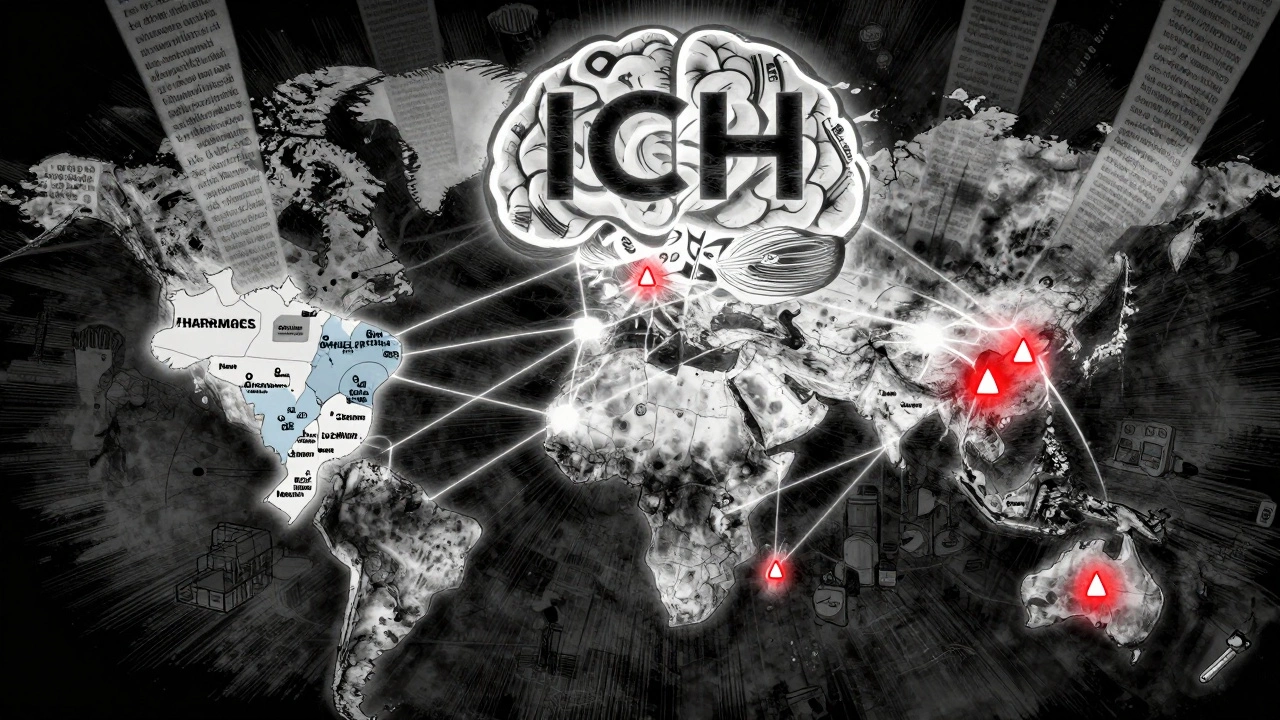
Every year, millions of people take generic medicines manufactured across the world. A pill made in India might end up in a pharmacy in Brazil, then in a hospital in Germany. But if something goes wrong - if a patient has a rare but serious reaction - how do we know? And how do we make sure the same mistake isn’t repeated across borders? That’s where pharmacovigilance harmonization comes in.
Why Global Drug Safety Needs to Be Aligned
Pharmacovigilance isn’t just about collecting reports of side effects. It’s about spotting hidden dangers before they become public health crises. Before harmonization, a drug company had to submit separate safety reports to the FDA, EMA, PMDA, and dozens of other agencies. Each had different forms, different deadlines, different definitions of what counted as a "serious" reaction. One company could spend months just rewriting the same report for each country. The push for alignment started in 1990 with the International Council for Harmonisation (ICH). Its goal was simple: make drug safety systems work the same way everywhere. Today, that means using the same format for adverse event reports (ICH E2B(R3)), the same timeline for urgent notifications, and the same way to define "unexpected" side effects. The result? Faster detection of risks, fewer duplicated efforts, and less chance that a dangerous reaction slips through the cracks because it was buried in paperwork.How the Big Regulators Compare
The U.S., Europe, and Japan lead the way, but they don’t all play by the same rules - yet. The FDA requires companies to report serious, unexpected adverse events within 15 days. That’s strict. But the EMA doesn’t use a flat deadline. It varies based on the drug’s risk profile. A new cancer drug? Report fast. A common painkiller with a long safety record? You’ve got more time. Japan’s PMDA uses real-world data from 12 million patient records through its J-STAR system. That’s powerful. The EMA has its DARWIN EU network, tracking 100 million patients across seven countries. The FDA’s Sentinel Initiative monitors 300 million records. These aren’t just databases - they’re early warning systems. But here’s the catch: Canada requires 30-day reporting for serious events. China still demands local reporting within 15 days - even if you’ve already sent the same report to the FDA. That means global companies are still doing double work. A single adverse event might be reported three times: once for the U.S., once for Europe, and once for China. That’s not just inefficient. It’s expensive.The Tech Revolution in Safety Monitoring
The old way of checking safety reports was like reading a stack of handwritten letters. Now, it’s like using AI to scan millions of emails in seconds. Since 2022, both the EMA and FDA have used machine learning to flag potential safety signals. These tools cut signal detection time by 30-40%. Japan’s AI models reduced false alarms by 25%. That’s huge. False alarms waste time and distract teams from real threats. But tech alone isn’t enough. The data has to be clean. One study found that 18-22% of safety reports get rejected because of incorrect MedDRA coding - the universal language for describing side effects. If one team codes "dizziness" as "vertigo," and another uses "lightheadedness," the system can’t connect the dots. That’s why the ICH is now working on harmonizing AI validation standards. By 2026, companies will need to prove their AI tools aren’t just fast - they’re accurate, fair, and repeatable across borders. No more "black box" algorithms.
What’s Holding Back the World?
Harmonization works well in rich countries. In low- and middle-income nations, it’s a different story. Only 31% of emerging markets have fully adopted the ICH E2B(R3) standard. Why? Lack of infrastructure. Many clinics still file reports on paper. Hospitals don’t have electronic health records. Staff don’t have training. A 2022 survey found that 74% of pharmacovigilance workers in places like Brazil, Nigeria, and Bangladesh couldn’t meet even basic ICH requirements. Meanwhile, the WHO’s VigiBase - the world’s largest global drug safety database - holds over 35 million reports from 134 countries. But nearly half of those come from just 10 high-income nations. That’s a massive blind spot. If a drug causes a rare reaction only in people with a specific genetic trait common in Southeast Asia, but no one’s reporting from there, the risk stays hidden. The WHO’s new Global Smart Pharmacovigilance Strategy, being finalized in 2025, aims to fix this. It’s not just about tech - it’s about funding, training, and local ownership. The goal: common standards by 2027. But that requires billions in investment. Deloitte estimates a $1.8 billion gap in infrastructure funding for low-income countries.Real Impact: What Harmonization Actually Saves
This isn’t theoretical. It’s saving lives and money. Novartis cut duplicate case entry by 92% after building one global safety system. Signal detection sped up by 38 days. That’s 38 days closer to pulling a dangerous drug off the market - or adding a warning before more people get hurt. The FDA estimates harmonization prevents unnecessary clinical trials involving 2.5 million patients every year. That’s not just efficiency. It’s ethics. Fewer people exposed to experimental drugs that might be unsafe. And the cost savings? Deloitte projects $2.3 billion a year globally if full harmonization is reached. That’s money that can go into research, not paperwork. But the biggest win? Fewer deaths. Experts estimate better signal detection could prevent 1,200 to 1,500 adverse drug reaction deaths each year. That’s not a number. That’s families.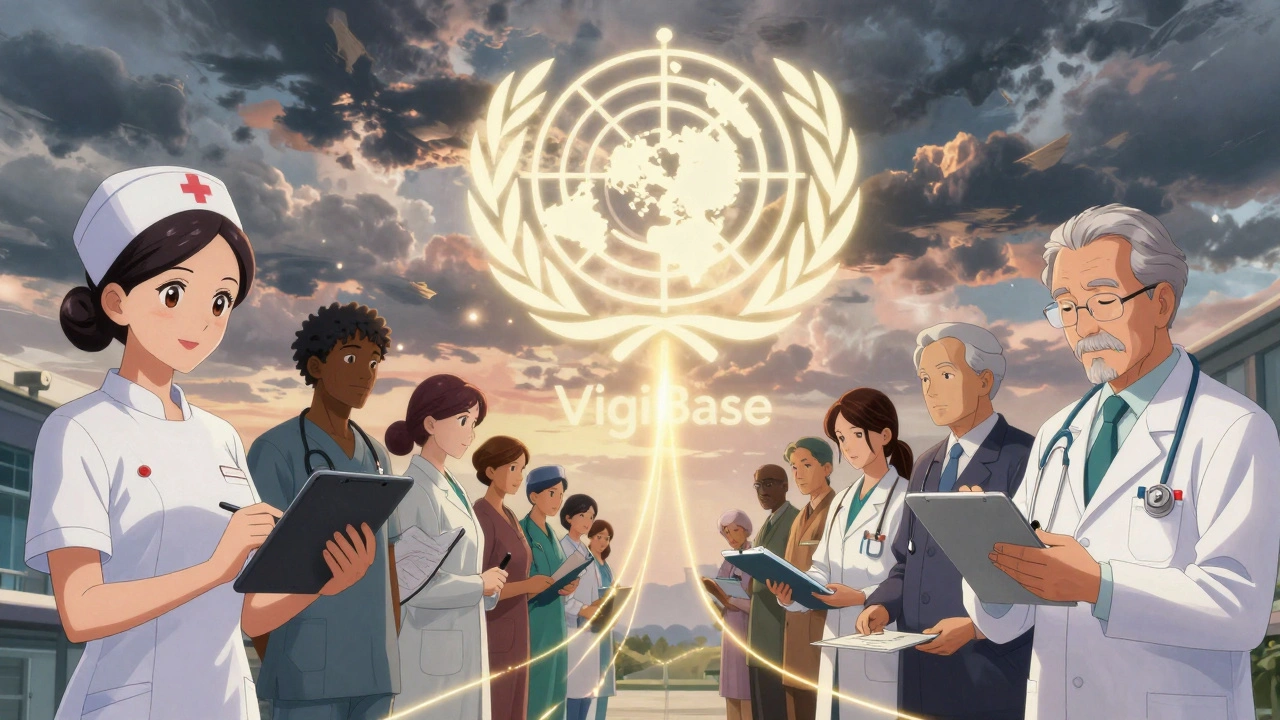
What It Takes to Get There
Harmonization isn’t automatic. It takes work. Companies need to train staff in data science. A 2024 survey found 76% of top pharma firms now require pharmacovigilance teams to understand basic machine learning. That’s a big shift. It’s no longer just about knowing how to fill out forms - it’s about understanding algorithms, data quality, and risk modeling. It also takes time. Full compliance usually takes 18 to 24 months. EU teams adapt faster - about six months. Asian teams often need 10 to 12 months because of language barriers and different regulatory cultures. The key? Start with the ICH E2B(R3) standard. It’s the baseline. 89% of the top 50 pharma companies use it. If you’re not using it, you’re already behind.The Road Ahead
The FDA, EMA, and PMDA formed a Joint Pharmacovigilance Task Force in January 2024. They’ve already aligned 78% of their risk management requirements for new biologics. That’s progress. But true harmonization means more than big companies in rich countries playing nice. It means every clinic, every pharmacy, every health worker - no matter where they are - can contribute to global safety. The next five years will decide if pharmacovigilance becomes a truly global system - or stays a patchwork of competing rules. The tools exist. The data is there. What’s missing is the will to invest, train, and share - equally.If we get this right, a child in Nairobi and a senior in Berlin will get the same level of protection from the same medicine. That’s not just regulation. That’s justice.
What is ICH E2B(R3) and why does it matter?
ICH E2B(R3) is the global electronic standard for submitting individual case safety reports (ICSRs) of adverse drug reactions. It replaced older paper and file-based formats. Using E2B(R3) ensures that every safety report - whether from a hospital in Canada or a clinic in Indonesia - can be read and processed by any regulatory system worldwide. It’s the common language of drug safety. Without it, reports get rejected, signals are missed, and delays cost lives.
How do the FDA and EMA differ in reporting serious side effects?
The FDA requires all serious, unexpected adverse events to be reported within 15 days, no exceptions. The EMA uses a tiered system: high-risk drugs (like new cancer treatments) must be reported within 7 days, while lower-risk drugs have up to 15 or even 30 days. The EMA also requires full Risk Management Plans (RMPs) for all new drugs. The FDA only requires Risk Evaluation and Mitigation Strategies (REMS) for about 1.2% of approved drugs. This means companies often have to submit two versions of the same report - one for Europe, one for the U.S.
Why is AI being used in pharmacovigilance?
AI helps sift through millions of safety reports to find hidden patterns. Traditional methods rely on manual review, which is slow and misses subtle signals. AI tools from the EMA and FDA now detect potential safety issues 30-40% faster. Japan’s system reduced false alarms by 25%, so teams focus on real risks. But AI must be validated - it can’t be a black box. New ICH guidelines by 2026 will require proof that these tools are accurate, fair, and consistent across borders.
What’s the biggest barrier to global pharmacovigilance?
The biggest barrier isn’t technology - it’s equity. High-income countries have electronic systems, trained staff, and funding. Low- and middle-income countries often still rely on paper forms, lack internet access, and have no one to analyze the data. Only 31% of emerging markets fully use the ICH E2B(R3) standard. Without investment in infrastructure and training, global safety will always have blind spots. A drug might be safe in the U.S. but dangerous in India - and no one will know because no one is reporting.
How do real-world data (RWD) systems improve safety monitoring?
Real-world data comes from electronic health records, insurance claims, and patient registries - not just clinical trials. The EMA’s DARWIN EU and the FDA’s Sentinel Initiative use RWD to track how drugs perform in millions of real patients. This catches side effects that only show up after years of use, or in people with other health conditions. The EU has mandated EHR integration since 2021. But in places like South Africa and Brazil, less than 15% of potential RWD sources are usable. Without RWD, safety systems only see part of the picture.
What’s the role of VigiBase in global pharmacovigilance?
VigiBase, run by the WHO, is the world’s largest database of individual case safety reports - over 35 million entries from 134 countries. It’s a global early warning system. When a new safety signal appears in one country, VigiBase can show if others have seen the same reaction. It’s especially vital for drugs used in low-income countries, where local systems are weak. But VigiBase only works if countries contribute data. Right now, most reports come from just a handful of wealthy nations.
Do generic drug manufacturers have to follow the same rules as big pharma?
Yes. Whether it’s Pfizer or a small generic maker in India, if a drug is sold internationally, it must comply with ICH standards. Generic drugs are held to the same safety monitoring rules as brand-name drugs. The difference? Many smaller manufacturers lack the resources to build global safety systems. That’s why harmonization is critical - it reduces the burden. A single E2B(R3) report can serve multiple regulators, making compliance more affordable for generics.
How can a company start moving toward pharmacovigilance harmonization?
Start with ICH E2B(R3). If you’re not using it, you’re already out of step. Next, build a single global safety database instead of separate regional systems. Train your team in data science basics - AI literacy is now a core requirement. Audit your MedDRA coding for consistency. Finally, map out all your reporting obligations by region and look for overlaps. The goal isn’t to copy every country’s rule - it’s to design one system that meets the strictest standard, then simplify from there.


12 Comments
It's wild to think that a pill you pick up at your local pharmacy could have traveled halfway across the world before landing in your hand. The fact that we can even track adverse reactions across borders is a quiet miracle. I hope more countries invest in this - it’s not just about efficiency, it’s about not letting someone die because their report got lost in translation.
Stop pretending this is about justice. It's about corporations cutting costs. The FDA and EMA aligned because it’s cheaper to make one report than three. The real victims? The clinics in Nigeria that still use paper forms while Big Pharma gets tax breaks for their "global system." This isn't harmonization - it's corporate convenience dressed up as ethics.
One thing people overlook is MedDRA coding. If one person writes "dizziness" and another writes "lightheadedness," the AI misses the link. That’s not a tech problem - it’s a training problem. Every pharmacist, nurse, and pharmacist’s assistant needs to be on the same page. No shortcuts. Just clear, consistent language. It’s basic, but it’s the foundation.
I work in pharmacovigilance and honestly, the shift to E2B(R3) was brutal at first. But now? We’ve cut our reporting time by 60%. The AI flags are still noisy, but they’re way better than reading 200 PDFs a week. The real win is that we’re catching things we never saw before - like that one case where a generic statin caused a rare liver issue in elderly patients with a specific gene variant. We’d have missed it if we were still doing regional silos.
Coming from the UK, I’ve seen how messy this used to be. The NHS used to send reports by fax. Literally. Now we’re integrated with DARWIN EU and it’s night and day. But I worry about the global south. If we don’t fund local training, we’re just exporting our systems and calling it progress. Real harmony means lifting others up, not just syncing databases.
Let’s be honest - most of the world isn’t ready for this. And frankly, why should they get to play in our sandbox without paying the entry fee? We’ve spent decades building these systems. Now we’re expected to hand them over to countries that can’t even maintain basic electronic records? This isn’t equity - it’s naive idealism. The $1.8 billion gap? That’s a donation, not an obligation.
If you’re a small generic manufacturer, stop overcomplicating it. Start with E2B(R3). Use open-source tools like OpenVigi. Train one person on MedDRA. That’s it. You don’t need a whole team. I’ve helped three small Indian firms get compliant in under 6 months. It’s not magic - it’s just focus. The system’s there. You just have to use it.
Real-world data is the future, but let’s not romanticize it. The FDA’s Sentinel system has 300 million records - that’s impressive, but it’s mostly white, middle-class, insured Americans. The data from low-income countries? It’s sparse, fragmented, or nonexistent. And when you train AI on that, you’re not building a global system - you’re building a system that only sees the world through the lens of the wealthy. We need to fund data collection in places like Bangladesh and Peru, not just ask them to adopt our formats. Otherwise, we’re just automating bias.
AI is great until it starts flagging your grandma’s cough as a fatal reaction because it saw "cough" and "heart failure" in the same report. I’ve seen it happen. These algorithms are trained on Western data, then deployed globally. They don’t know that in rural India, "dizziness" is how people describe low blood sugar. You’re not saving lives - you’re creating new blind spots. And no one’s auditing these tools. That’s not innovation. That’s negligence.
One thing I’ve learned from working with clinics in rural Colombia: harmonization isn’t about tech. It’s about trust. If the local nurse doesn’t believe the system will do anything with their report, they won’t bother. We spent a year just sitting with them, showing them how past reports led to actual changes - like a warning added to a diabetes med after three local deaths. That’s what makes people care. Not standards. Not forms. Real impact.
I used to think this was all about saving lives. Then I saw the internal memo from my company: "Harmonization reduces compliance costs by 40%. Target ROI: $2.1B by 2027." So now I see it differently. It’s a cost center turned profit center. The lives saved? That’s the side effect. The real win is the balance sheet. And I’m not even mad. Just… tired of the moral theater.
It is, without question, a moral imperative that pharmacovigilance be universally standardized - not merely as a technical exercise in regulatory alignment, but as a profound ethical act of epistemic justice. To permit the continued fragmentation of adverse event reporting is to perpetuate a colonial epistemology wherein the suffering of the Global South remains invisible to the epistemic apparatuses of the Global North. The ICH E2B(R3) standard is not merely a format - it is a linguistic vessel of dignity. To withhold its implementation is to silence the voices of the marginalized in the most literal, clinical sense. We must not confuse efficiency with equity - for equity is the only metric that matters in the sacred calculus of human life.