
4 Jan |
11:32 AM
Opioid Dose Calculator for Older Adults
Opioid Dose Calculator
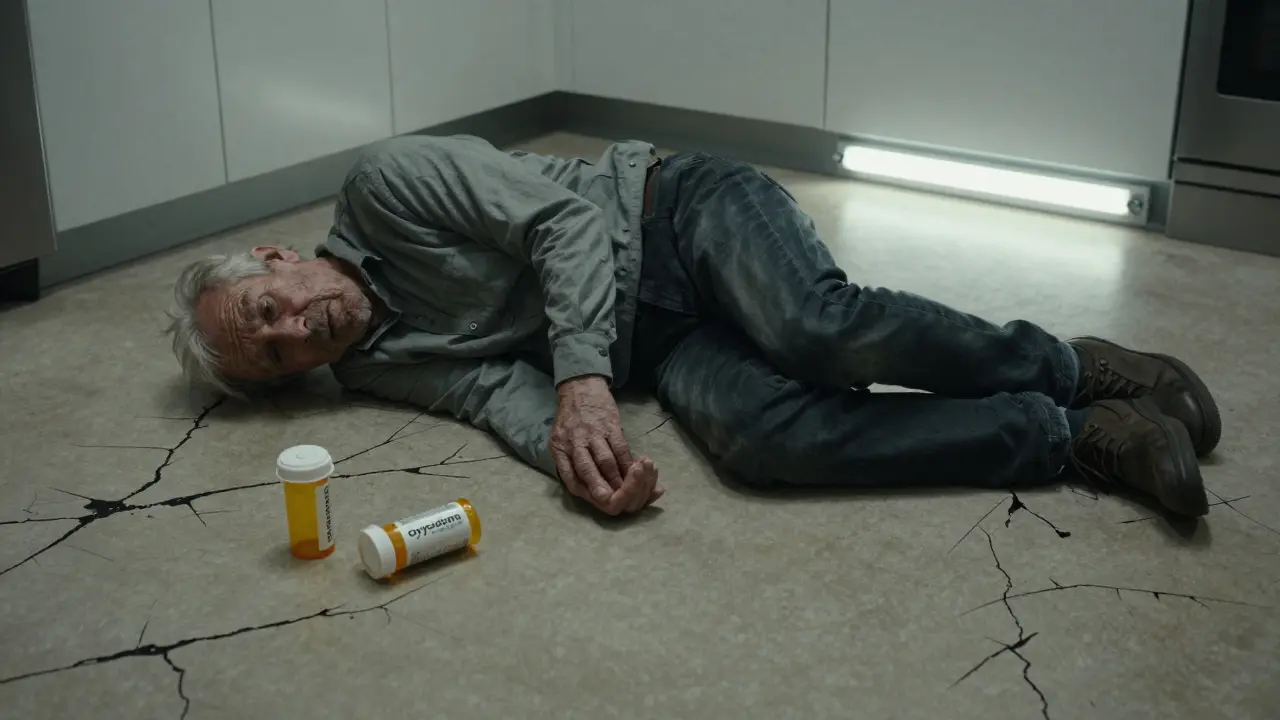
When a 78-year-old man falls in his kitchen and breaks his hip, doctors often look at slippery floors or poor lighting. But rarely do they ask: was he on opioids? The truth is, for older adults, opioids aren’t just painkillers-they’re fall triggers, confusion inducers, and silent killers. And too often, the doses prescribed are simply too high for their aging bodies.
Why Older Adults React Differently to Opioids
Your body changes as you age. Your kidneys slow down. Your liver processes drugs less efficiently. You lose muscle mass and gain fat. Your blood-brain barrier becomes more porous. These aren’t minor tweaks-they’re major shifts in how your body handles medicine. For someone under 65, a 10 mg dose of oxycodone might be routine. For an 80-year-old with reduced kidney function? That same dose can cause dizziness, confusion, and a dangerous drop in blood pressure. Studies show older adults are more sensitive to opioids because their brains absorb more of the drug, and their bodies clear it slower. This isn’t about being weak-it’s about biology. A 2011 study found that, on average, 80 adults aged 65 and older visited emergency rooms every day because of problems with narcotic pain relievers. Seven of those visits involved heroin. That’s not just misuse-it’s a system failing people who need pain relief but can’t safely handle standard doses.Opioids and Falls: A Deadly Combination
Falls are the leading cause of injury-related death in older adults. And opioids make them far more likely. Opioids don’t just dull pain-they dull your balance, your reflexes, and your awareness. They cause sedation. They trigger orthostatic hypotension (a sudden drop in blood pressure when standing). They blur vision and slow reaction time. Even weak opioids like tramadol can cause hyponatremia-low sodium levels-which leads to dizziness, confusion, and stumbling. One study of 2,341 adults over 60 found that those taking opioids had a 6% fracture rate over 33 months, compared to 4% for those not on opioids. The difference wasn’t statistically significant, but the trend was clear: opioids increase fall risk. And when an older adult falls, the consequences are rarely minor. A broken hip often leads to surgery, hospitalization, loss of independence, and sometimes death. The STOPPFall tool was created to help doctors decide when to stop-or never start-opioids in people at risk of falling. It’s not about denying pain relief. It’s about weighing: does the benefit of pain control outweigh the risk of a life-altering fall?Delirium: The Hidden Danger
Delirium isn’t just forgetfulness. It’s sudden, severe confusion, disorientation, hallucinations, and agitation. It’s not dementia. It’s not depression. It’s a medical emergency-and opioids are a leading cause in older adults. A landmark 2023 study from the Danish Dementia Research Centre followed 75,471 people over 65 with dementia. Of those, 31,619 were prescribed opioids. The results were shocking: those who started opioids had an elevenfold higher risk of dying within the first two weeks compared to those who weren’t prescribed them. Why? Because opioids disrupt brain chemistry. In someone with dementia, even a small dose can push the brain into crisis mode. Sedation turns to confusion. Confusion turns to agitation. Agitation turns to withdrawal, dehydration, and organ failure. Doctors often mistake opioid-induced delirium for worsening dementia. Families think Grandma is just “acting strange.” But it’s not aging. It’s a drug reaction. And it’s preventable.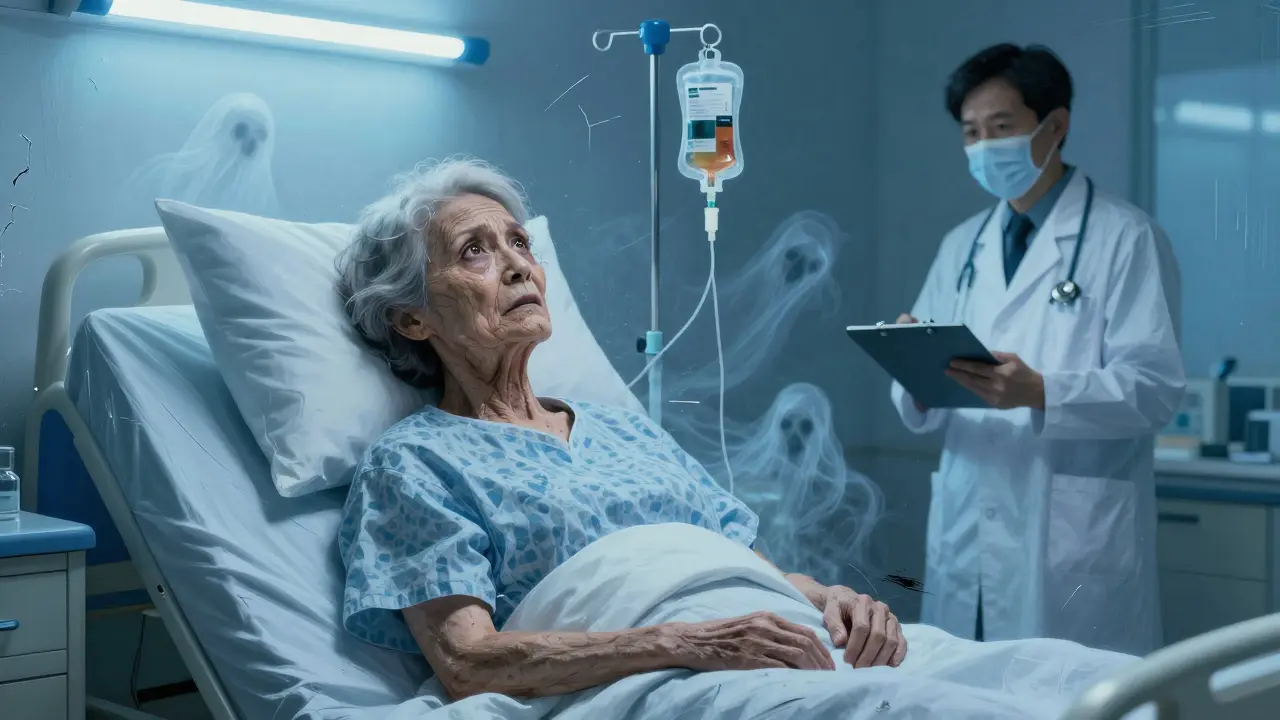
Dose Adjustments: The ‘Start Low, Go Slow’ Rule
There’s no one-size-fits-all dose for older adults. But there is one rule every doctor should follow: start low, go slow. That means beginning with 25-50% of the dose you’d give a younger adult. For example, instead of 5 mg of oxycodone every 6 hours, start with 2.5 mg every 8 hours. Monitor for sedation, dizziness, or confusion for at least 48 hours before increasing. The CDC and other guidelines now strongly recommend this approach. But many doctors still prescribe the same doses they’d use for a 40-year-old. Why? Because they’re not trained in geriatric pharmacology. Because they’re pressed for time. Because they think, “She’s in pain-she needs this.” But here’s the hard truth: if opioids aren’t making daily life better-if they’re not helping someone walk to the bathroom, eat dinner, or sleep through the night-then they’re doing more harm than good.When Opioids Are Necessary-and When They’re Not
This isn’t about banning opioids. It’s about using them wisely. For someone recovering from hip surgery? A short course of low-dose opioids may be appropriate. For someone with chronic lower back pain that hasn’t improved in six months? Odds are, opioids aren’t helping-and they’re making things worse. Non-drug options should always come first: physical therapy, heat/cold therapy, acupuncture, tai chi, cognitive behavioral therapy for pain. These work. They’re safe. And they don’t cause delirium or falls. When opioids are truly needed, use the lowest effective dose for the shortest possible time. Avoid long-acting formulations unless absolutely necessary. Never combine opioids with benzodiazepines, sleep aids, or antihistamines-those combinations can be fatal.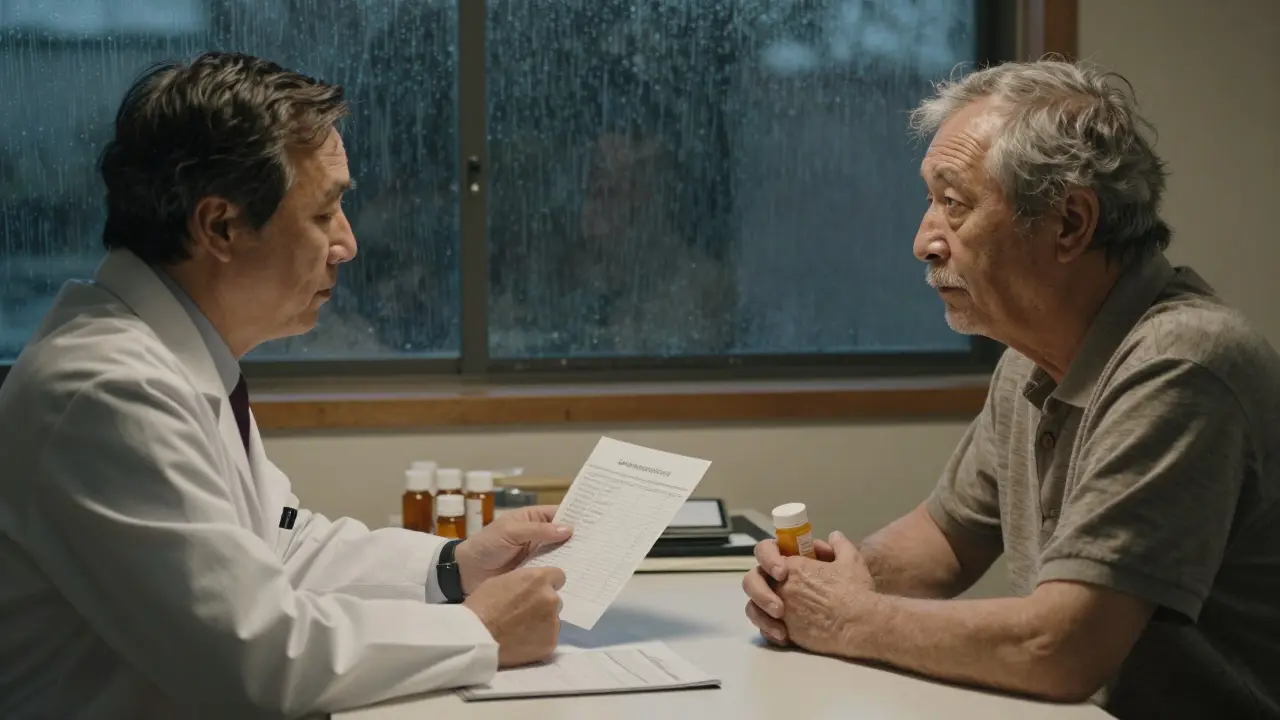
12 Comments
Let me guess-this is another government-funded scare piece to push non-opioid alternatives so bureaucrats can cut costs and blame the elderly for being ‘too fragile.’
Where’s the data showing opioids cause more harm than benefit in chronic pain? You cite one 2011 study like it’s gospel, but ignore the 2020 JAMA paper showing opioids reduce disability in osteoarthritis patients.
And don’t get me started on ‘start low, go slow’-that’s just code for ‘don’t treat pain aggressively,’ which means people suffer in silence while bureaucrats pat themselves on the back.
My grandfather was on oxycodone for 8 years after spinal fusion. He walked, gardened, played with his grandkids-until they ‘deprescribed’ him. Now he’s in a wheelchair, depressed, and medicated with gabapentin that makes him hallucinate.
So yeah, I’m calling this fearmongering dressed as medicine.
Who benefits from this narrative? Pharma? The VA? The CDC? Someone’s making money off this panic.
And don’t tell me ‘it’s biology.’ My 75-year-old neighbor runs marathons. Biology isn’t a death sentence-it’s a variable.
Stop infantilizing older adults. They’re not children who need their pills rationed.
If you want to reduce falls, fix the damn floors, not the prescriptions.
And for the love of God, stop pretending opioids are the enemy. The enemy is a healthcare system that doesn’t listen.
Also, who funded this article? NIDA? SAMHSA? Tell us the real agenda.
People like me aren’t ‘addicts’-we’re patients who’ve been abandoned by a system that thinks pain is a moral failing.
And before you say ‘non-drug options,’ try doing tai chi when your spine feels like it’s been shattered by a jackhammer.
So yeah-I’m the contrarian. And I’m right.
Thank you for this deeply thoughtful, meticulously researched piece.
It’s not often that medical writing manages to balance scientific rigor with human dignity-and you’ve done both.
I’ve watched my mother navigate chronic pain for over a decade, and I can attest: the shift from ‘treat the pain’ to ‘treat the person’ is the only ethical path forward.
What struck me most was the delirium data-elevenfold increase in mortality? That’s not a side effect; it’s a catastrophe.
And yet, we still prescribe opioids like they’re aspirin, as if aging were a glitch to be patched, not a biological reality to be honored.
It’s heartbreaking that so many clinicians still equate ‘pain score’ with ‘moral obligation to prescribe.’
But your call for ‘start low, go slow’ isn’t just clinical-it’s compassionate.
It acknowledges that pain is real, but so is vulnerability.
And that’s why deprescribing isn’t failure-it’s fidelity to the patient’s true well-being.
Perhaps the most radical idea here is that sometimes, the most powerful act of care is to say: ‘I won’t give you this drug, because I care too much to let it hurt you.’
That’s not weakness. That’s wisdom.
And if we can teach that to every medical student, we might finally begin to heal the system.
Thank you.
-A daughter, a nurse, and a believer in slow medicine.
Let’s cut through the narrative theater.
Opioid-induced delirium in dementia patients? That’s not a pharmacological issue-it’s a diagnostic failure.
When you’re prescribing opioids to a 78-year-old with Alzheimer’s, you’re not managing pain-you’re managing behavioral symptoms with a blunt instrument.
And yes, the CNS depression is real-but so is the lack of non-pharmacological infrastructure.
Where are the geriatric psychiatrists? The behavioral intervention teams? The 24/7 dementia care units?
We outsource cognitive decline to pharmacology because we don’t fund care.
So now we blame the drug.
But the drug isn’t the problem-the system is.
And until we stop treating elders as pharmacological test subjects, we’ll keep having this same conversation.
Also, ‘start low, go slow’? That’s not a guideline-it’s a Band-Aid on a hemorrhage.
We need a paradigm shift: from opioid-centric pain management to dementia-centric care design.
And if you’re still prescribing oxycodone to someone who can’t tell you where they are? You’re not a doctor-you’re a liability.
Fix the care, not the prescription.
I’ve seen this too many times.
My dad was on tramadol for years after his knee replacement.
He didn’t fall-he just stopped smiling.
One day, he couldn’t get up from the couch.
They blamed his age.
Turns out, it was the meds.
We tapered him off slowly-no withdrawal, no drama.
Now he walks with a cane, does yoga twice a week, and laughs again.
It wasn’t magic.
It was just stopping the thing that was slowly killing his spirit.
Don’t wait until it’s too late.
Ask the questions.
Listen to the silence.
THIS IS WHY AMERICA IS DYING.
Doctors are giving out opioids like candy, and then acting shocked when old people die from it?
NO! It’s not biology-it’s NEGLIGENCE!
Every single one of these deaths is preventable, and every doctor who prescribes without caution is a murderer in a white coat!
My uncle died at 72 after a hip fracture-he was on 20mg oxycodone daily, and they didn’t even check his liver!
They didn’t care!
They just wanted to get him out the door!
And now we have a whole generation of seniors being poisoned by lazy, overworked, undertrained ‘professionals’ who think ‘start low’ means ‘start at 5mg’ instead of ‘start at 1mg’!
It’s not a ‘system failure’-it’s a moral collapse!
And don’t even get me started on ‘non-drug options’-like what? Massage? Tai chi? Are you kidding me?!
When your bones are grinding like sandpaper, you don’t want to ‘find your inner peace’-you want pain relief!
But not at the cost of your life!
So stop preaching and start TRAINING!
And if you’re a doctor reading this and you’re still prescribing like it’s 2008?
You need to hang up your stethoscope.
RIGHT NOW.
And if you’re a family member?
STOP TRUSTING THEM.
Ask for the dose. Ask for the alternatives. Ask for the data.
Because if you don’t, no one will.
And your loved one? They’ll be another statistic.
And I’ll be right here, screaming into the void.
AGAIN.
Let’s be real-this whole ‘opioids are deadly for seniors’ thing is just the new ‘tobacco is fine’ campaign.
Big Pharma doesn’t want you to know that gabapentin and antidepressants are just as dangerous-but they don’t have the same PR problem.
They’ll let you die of pain rather than risk a lawsuit over a fall.
And don’t believe the ‘delirium’ stats-those are inflated by hospitals coding everything as ‘opioid-related’ to get Medicaid funding.
My aunt was on oxycodone for 15 years after a car crash.
She lived to 89.
Walked. Drove. Cooked.
She didn’t fall.
She didn’t get delirious.
She just had pain.
And the system punished her for it.
Now she’s on a cocktail of antidepressants that make her cry at commercials.
So yeah-this isn’t science.
It’s moral panic dressed in graphs.
And the real killer? The one who took away her dignity.
Not the pill.
The system.
As a geriatric pharmacist with 22 years in the field, I’ve seen the data.
And I’ve seen the deaths.
And I’ve seen the families who didn’t know their mother was hallucinating because of a 5mg oxycodone tablet.
Here’s what no one says: opioids are not inherently evil.
They’re tools.
And like any tool, misuse leads to harm.
But the real tragedy isn’t the prescription-it’s the lack of pharmacist involvement.
In 90% of cases I’ve reviewed, no pharmacist reviewed the regimen.
No medication reconciliation.
No fall risk assessment.
Just a scribble on a pad and a ‘take as needed.’
That’s not medical care.
That’s negligence wrapped in a prescription.
And if you think ‘start low, go slow’ is just a suggestion, you’re not just wrong-you’re dangerous.
Every time we skip a med review, we’re gambling with someone’s life.
And the worst part?
Most of these patients don’t even know they’re at risk.
So we need pharmacists embedded in primary care.
Not as an afterthought.
As a standard.
Because if you’re not reviewing the whole regimen, you’re not treating the patient.
You’re just writing checks you can’t cash.
They say opioids cause falls but they never mention the real cause: the government’s 2016 CDC guidelines that forced doctors to cut doses or lose their license.
So now, seniors are getting 2.5mg when they need 10mg, and they’re in agony-and then they fall because they’re too weak to stand.
It’s not the drug-it’s the policy.
And don’t tell me ‘start low’-I’ve seen patients on 1mg who can’t get out of bed.
They’re not overdosing-they’re underdosed because of bureaucratic fear.
And now they’re being told ‘try tai chi’ like it’s a magic cure.
Meanwhile, the DEA is still raiding clinics for prescribing too much.
But they never raid the ones prescribing 20 different psych meds to old people.
That’s not medicine.
That’s a cult.
And the victims? They’re too scared to speak up.
Because if they say they’re in pain?
They get labeled ‘addicts.’
And if they say they’re dizzy?
They get labeled ‘demented.’
Either way-they lose.
And the system wins.
It’s fascinating how this article frames opioids as the villain, when the real villain is the medical profession’s refusal to engage with aging as a continuum of complexity.
Every time we reduce a 78-year-old’s pain experience to a single drug metric, we erase their personhood.
And yet, we’re shocked when they fall?
Or become delirious?
Or stop eating?
These aren’t side effects-they’re symptoms of a system that treats the body like a machine, not a living, breathing, feeling entity.
Deprescribing isn’t about reducing pills.
It’s about restoring agency.
It’s about saying: ‘Your pain matters, but your dignity matters more.’
And if we can’t do that?
Then we’ve already lost.
Not because of opioids.
But because we forgot how to care.
Y’all are overcomplicating this.
Old people get opioids? Fine.
But they need to take responsibility too.
My pops was 80, on oxycodone, and he still mowed his lawn, fixed his truck, and drove to church.
He didn’t fall because he was careful.
He didn’t get confused because he stayed sharp.
So don’t blame the pill-blame the lazy seniors who sit around watching TV and expect the world to fix them.
And stop with this ‘delirium’ nonsense-it’s just dementia with a fancy name.
And ‘start low, go slow’? That’s just code for ‘we don’t want to pay for real care.’
Real Americans don’t need hand-holding.
They need discipline.
And if they can’t handle a little pain? Then they shouldn’t be driving or living alone.
Bottom line: stop coddling.
Start empowering.
And if your grandpa can’t get up after taking his pill?
Maybe he needs a walker-not a lawsuit.
Biological aging is not a defect.
It’s a process.
And we treat it like a bug to be fixed.
But the body doesn’t fail.
It adapts.
And when we force it to process drugs designed for younger systems?
We’re not treating pain.
We’re overriding adaptation.
That’s not medicine.
That’s arrogance.
My grandmother took opioids for 12 years after a fractured spine.
She never fell.
She never got confused.
She lived to 94.
She also had a daily routine: walks, tea, quiet music, and a daughter who asked her every night: ‘How’s the pain?’
Not ‘Are you dizzy?’
Not ‘Are you hallucinating?’
Just: ‘How’s the pain?’
And when she said ‘a little less,’ we lowered the dose.
When she said ‘more,’ we added a heat pack.
It wasn’t science.
It was presence.
Maybe that’s the real treatment.
Not the pill.
But the person holding the hand.