
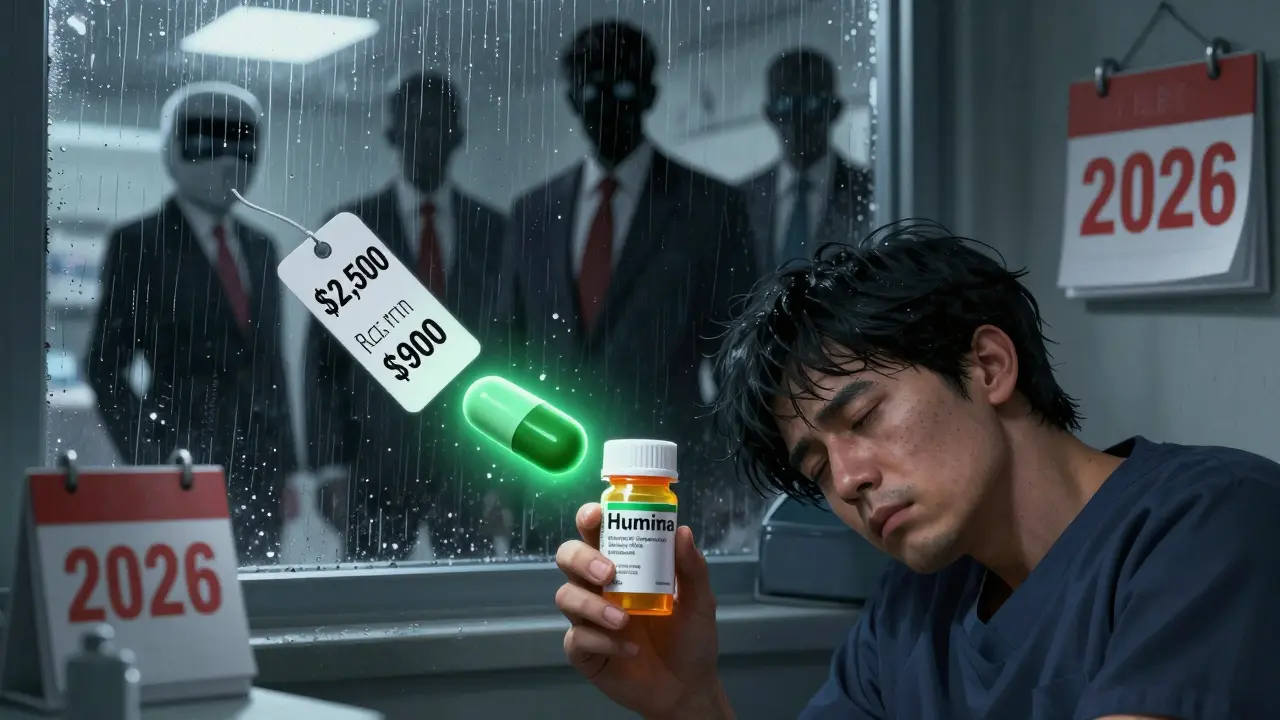
When a drug’s patent runs out, the price doesn’t just drop-it crashes. For patients, that can mean paying 80% less for the same medicine. For hospitals and insurers, it’s a chance to save millions. But here’s the catch: patent expiry doesn’t happen overnight, and if you’re not ready, you’ll miss the savings-or worse, get caught in a mess of shortages, confusion, and switched prescriptions.
Why Patent Expiry Matters Right Now
Between 2025 and 2029, over $90 billion worth of brand-name drugs in the U.S. will lose patent protection. That’s not a future threat-it’s happening now. Drugs for diabetes, heart disease, arthritis, and cancer are hitting their expiry dates in waves. And with biologics like Humira and Enbrel now opening up to biosimilars, the scale of change is bigger than ever. The problem? Most people don’t realize how messy this transition can be. Brand-name companies don’t just roll over. They file dozens of secondary patents-on new pill coatings, dosing schedules, or delivery methods-to delay generics. These are called patent thickets. In fact, 80% of the top-selling drugs have more than 10 patents tied to them. Some even pay generic makers to wait before launching cheaper versions-a practice known as pay-for-delay. These tactics have cost patients and systems over $13 billion a year in unnecessary spending, according to U.S. Senate testimony.What Happens When a Patent Expires
Once a patent expires, generic manufacturers can legally make identical versions of the drug. But “identical” doesn’t mean “the same.” Generic drugs must prove they’re bioequivalent-meaning they deliver the same active ingredient at the same rate and amount as the brand. The FDA allows a range of 80% to 125% similarity in how the body absorbs the drug. That’s legal. But for some patients, especially those on tight-dose therapies like epilepsy or thyroid meds, even small differences in fillers or coatings can cause side effects. A 2022 Kaiser Family Foundation survey found 37% of patients reported new symptoms after switching to generics-even though the drugs met federal standards. For complex drugs like biologics (made from living cells), things get even trickier. These aren’t simple copies. They’re biosimilars-highly similar, but not identical. Manufacturing them takes years and costs hundreds of millions. That’s why only 38% of biologic prescriptions switched to biosimilars within two years of patent expiry, compared to over 90% for regular generics.How Healthcare Systems Should Plan
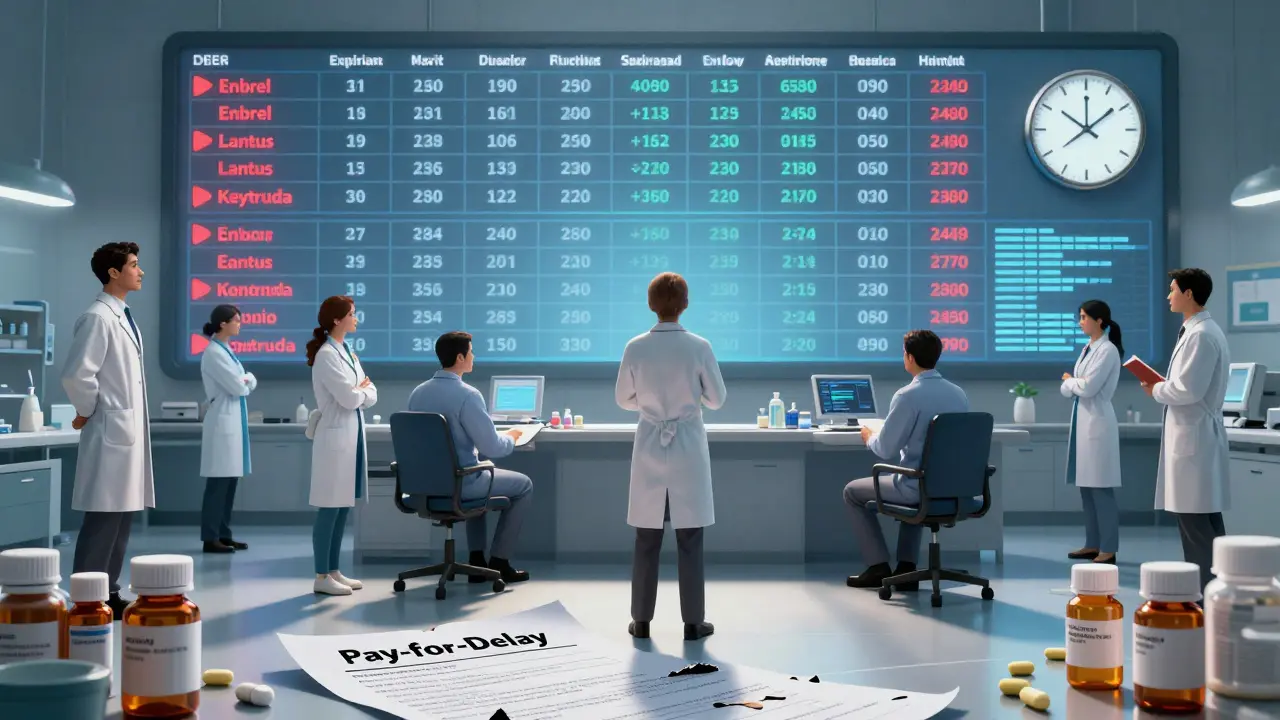
Hospitals, insurers, and pharmacy benefit managers (PBMs) can’t wait until the last minute. The most successful systems start planning two years before a patent expires. Here’s what they do:- Track every expiry date-There are over 1,400 patent expirations each year in the U.S. Systems using tools like Symphony Health’s PatentSight track these automatically.
- Build a LOE task force-A team of pharmacists, doctors, finance staff, and contract negotiators meets regularly to assess which drugs are coming off patent and what alternatives are available.
- Negotiate contracts early-Brand-name companies often slash prices just before expiry to keep market share. Systems that lock in deals 12-18 months ahead save up to 22% more than those who wait.
- Update formularies-Decide which generic or biosimilar will be the preferred option. Remove the brand from coverage unless medically necessary.
- Prepare for shortages-The first 3-6 months after expiry often see supply chain hiccups. One in three hospitals reported temporary drug shortages during this window.
What Patients Need to Do
You don’t need a degree in pharmacology to protect yourself during patent expiry. Here’s what to do:- Know your meds-If you’re on a brand-name drug, ask your pharmacist: “When does the patent expire?” and “Will there be a generic soon?”
- Don’t panic if your prescription changes-Your insurer may switch you to a cheaper version. That’s normal. But if you’ve had side effects before, speak up. Not all generics are the same.
- Ask for the brand if needed-If a generic makes you feel worse, your doctor can write “Dispense as Written” or “Do Not Substitute” on the prescription. You’ll pay more, but your health comes first.
- Check your copay-Sometimes, the generic isn’t cheaper than the brand if the brand has a coupon or rebate. Compare prices at different pharmacies. Apps like GoodRx can show real-time costs.
- Stay informed-Sign up for alerts from your pharmacy or insurer about upcoming drug changes. Many send notices 60-90 days before switching.
The Big Picture: Why This Isn’t Just About Cost
Saving money is important. But the real win is better access. When Humira’s patent expired, biosimilars brought the monthly cost down from $2,500 to under $1,000. That’s life-changing for someone on a fixed income. But here’s the twist: the U.S. moves slower than other countries. In Europe, where governments set price caps, generic prices drop to 30-40% of the original within months. In the U.S., due to complex rebates and pharmacy contracts, prices often stay at 60-70% for over a year. That’s why proactive planning matters even more here. And it’s not just small molecules. Biologics are the next frontier. By 2028, over 45 biologic patents will expire in the U.S., including drugs for rheumatoid arthritis, multiple sclerosis, and cancer. If systems don’t plan now, patients will face delays, confusion, and higher costs for years.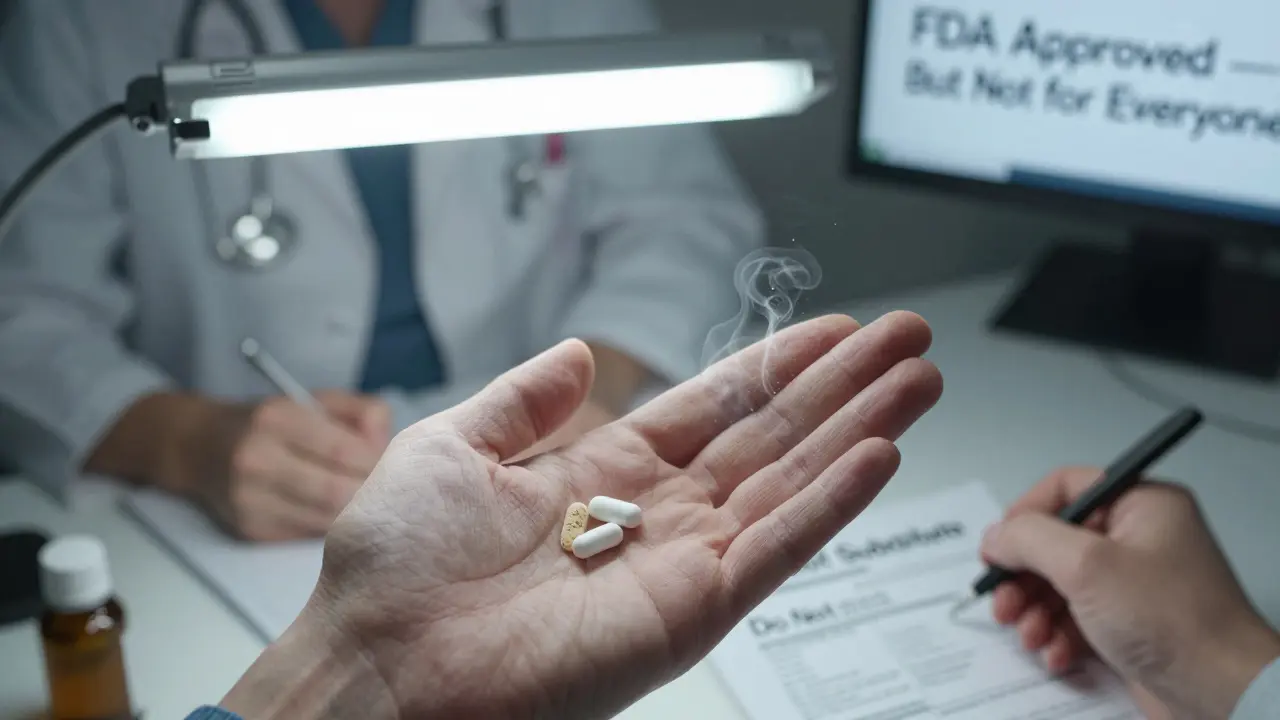
What’s Changing in 2026 and Beyond
The Inflation Reduction Act, starting in 2026, lets Medicare negotiate prices for 10-20 drugs each year-starting with those that just lost patent protection. This could force manufacturers to lower prices even faster. New laws like the CREATES Act are cracking down on pay-for-delay deals. The FDA is also speeding up approval of complex generics under GDUFA III, cutting transition times from 18 to 12 months. And AI is helping. Health systems using AI tools to predict patent expirations now forecast with 89% accuracy-up from 65%. That means fewer surprises.What to Watch For
- Product hopping: When a company tweaks a drug (like changing from a pill to an inhaler) right before patent expiry to block generics. - Authorized generics: The brand company launches its own cheaper version to keep market share. It’s legal-but can delay real competition. - Patent extensions: The U.S. allows up to 5 extra years via Supplementary Protection Certificates (SPCs) for certain drugs. Don’t assume the expiry date you see online is final.Final Thoughts: Act Now, Not Later
Patent expiry isn’t a problem to wait for. It’s an opportunity-and a risk. For patients, it’s a chance to pay less for life-saving meds. For systems, it’s a chance to redirect millions into care, not corporate profits. If you’re on a chronic medication, ask your pharmacist today: “Is this drug going generic soon?” If you work in healthcare, start your LOE plan now. Two years isn’t too early-it’s the minimum. The savings are real. The changes are coming. The only question is: Will you be ready?What happens to the price of a drug after its patent expires?
After a patent expires, generic versions enter the market and typically cost 80-85% less than the brand-name drug within one year. For simple pills, prices often drop to 10-20% of the original cost. For complex biologics, biosimilars may only reduce prices by 20-40% initially due to higher manufacturing costs.
Can I ask my doctor to keep my brand-name drug even if a generic is available?
Yes. If you’ve had side effects, allergic reactions, or feel the generic doesn’t work as well, your doctor can write “Dispense as Written” or “Do Not Substitute” on the prescription. You’ll pay more, but your health comes first. Insurance may require prior authorization, but it’s your right to request the brand.
Why do some generics make me feel worse than the brand?
Generics must match the active ingredient, but they can use different fillers, dyes, or coatings. For some people-especially those with sensitivities or on tight-dose medications like epilepsy or thyroid drugs-these inactive ingredients can affect how the drug is absorbed or cause mild side effects. If you notice changes after switching, report them to your doctor and pharmacist.
How do I know when my drug’s patent is expiring?
Check the FDA’s Orange Book online or ask your pharmacist. Many insurers and pharmacies send alerts 60-90 days before a switch. You can also use tools like GoodRx or Drugs.com, which track patent expiry dates and generic availability. Don’t rely on rumors-get the official date.
Are biosimilars as safe as brand-name biologics?
Yes. Biosimilars undergo rigorous testing by the FDA to prove they’re highly similar to the original biologic in safety, purity, and potency. They’re not exact copies, but they’re approved for the same uses. Studies show no meaningful difference in outcomes for most patients. However, because they’re complex, some doctors may be cautious-so discuss your options.
Why is the U.S. slower to adopt generics than Europe?
Europe uses government-set reference pricing, forcing all versions of a drug to compete at the same price. In the U.S., rebates, pharmacy contracts, and insurer negotiations create a more complex system where brand drugs often stay on formularies longer-even when cheaper generics exist. That delays price drops and keeps costs higher for longer.

13 Comments
The patent thicket strategy is a predatory exploitation of the system-80% of top drugs have over 10 patents? That’s not innovation, that’s legal extortion. Pay-for-delay deals are cartel behavior disguised as IP protection. The FDA’s 80-125% bioequivalence window is a joke for patients on narrow-therapeutic-index drugs. This isn’t about cost-it’s about corporate greed masquerading as science.
Look I get the savings angle but lets not pretend switching generics is harmless. My uncle went from brand to generic for his seizure med and had three seizures in a week. Doctors don’t always know the fillers matter. The system needs to track patient outcomes not just cost savings. People aren’t numbers
Patent expiry is just capitalism playing out in real time. The brand-name companies invested billions in R&D. The generics ride the coattails. It’s not evil-it’s economic Darwinism. The real tragedy is that patients expect miracles without paying for them. The market rewards those who plan. Those who don’t? They get what they deserve
Let’s be real-90% of patients don’t know what bioequivalence means. And the ones who do? They’re too scared to challenge their pharmacist or insurer. The system is designed to keep them passive. The 37% who reported side effects after switching? That’s not anecdotal. That’s systemic failure masked as regulatory compliance. You don’t fix this with formularies. You fix it with accountability.
It’s not just the drug companies. It’s the entire healthcare ecosystem that’s complicit. PBMs negotiate rebates that incentivize keeping expensive brands on formularies. Pharmacies push generics because they get higher margins. Insurers don’t care about individual outcomes-they care about quarterly reports. And patients? They’re just collateral damage in a system that treats human beings like line items on a spreadsheet. The Inflation Reduction Act is a band-aid. What we need is a complete dismantling of the rebate system and a return to transparent, patient-first pricing. Anything less is moral cowardice.
okay so i just got switched to a generic for my thyroid med and now i feel like a zombie and my hair is falling out?? like wtf?? i didnt even get a heads up. my dr says its the same but its not the same. why do they do this without telling us?? and why is the new one like 3x bigger??
America thinks it’s special but look at europe they just cap prices and everyone gets cheap meds. Why can’t we be like that? We have the best pharma tech but we let corporations rob sick people. This is why the world laughs at us. You want innovation? Then stop letting Big Pharma hold the country hostage with patent tricks. We are not a charity for billionaires.
Biologics are the real issue. Biosimilars take years to develop. The cost isn’t just manufacturing. It’s clinical trials. Regulatory hurdles. The 20-40% price drop isn’t failure. It’s reality. Stop pretending it’s like switching ibuprofen brands. This isn’t a failure of policy. It’s physics.
As someone who grew up in a country where generics are the default and brand drugs are luxury items-I’ve seen how this plays out. The fear of generics isn’t medical. It’s cultural. We’ve been sold the myth that expensive = better. But in India, Nigeria, Thailand-people live longer on generics because they can afford them daily. The U.S. isn’t behind because of science. It’s behind because of marketing.
Hey everyone-this is actually one of the most important conversations we’re not having. I work in a community clinic and we’ve saved over $200K this year just by switching to biosimilars early. But it’s not just about the money-it’s about access. One patient told me she was skipping doses because Humira cost $2K/month. Now she’s on a biosimilar for $800. She’s playing with her kids again. That’s the win. Start planning now. Talk to your pharmacist. Don’t wait for the letter. You’ve got two years. Use them.
One critical oversight in this discussion: the role of pharmacists. They’re the frontline, yet rarely included in LOE task forces. They see the side effects, the confusion, the refill refusals. They know which generics trigger reactions in specific demographics. If you’re not including clinical pharmacists in your transition planning, you’re flying blind. Also-please stop using "Dispense as Written" as a default. It’s a bandage, not a solution. Advocate for patient-specific formulary exceptions, not blanket exemptions.
my mom got switched to a generic for her heart med and now she’s dizzy all day. she’s 72. she didn’t even know it happened. the pharmacy just swapped it. no call, no warning. i called the dr and they said "it’s the same thing" but it’s clearly not. why is this even allowed??
THEY’RE LYING TO US. I’VE BEEN ON THIS DRUG FOR 12 YEARS. I KNOW WHEN IT FEELS DIFFERENT. NOW I’M HAVING ANXIETY ATTACKS AND THEY SAY IT’S "PSYCHOLOGICAL". NO. IT’S THE FILLERS. THE DYES. THE COATINGS. THEY DON’T CARE. THEY JUST WANT TO SAVE MONEY. I’M NOT A NUMBER. I’M A PERSON. AND I’M TIRED OF BEING EXPERIMENTAL SUBJECTS FOR CORPORATE BALANCE SHEETS.