
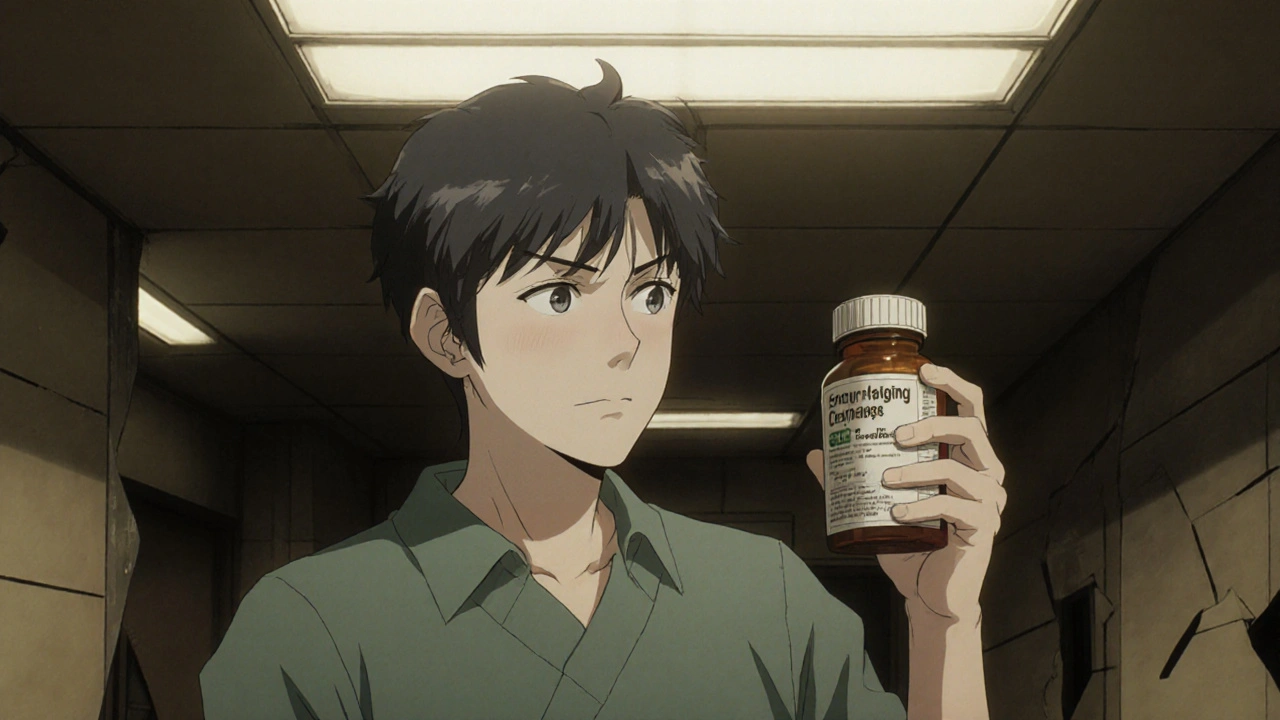
When a patient has a bad reaction to a generic drug, who reports it? And does it even get reported? The answer isn’t as simple as it should be. By law, serious adverse events (SAEs) from generic drugs must be reported just like those from brand-name drugs. But in practice, they rarely are. Despite making up 90% of all prescriptions filled in the U.S., generic drugs account for far fewer than 90% of serious adverse event reports. This gap isn’t a mistake-it’s a systemic blind spot in drug safety monitoring.
What Counts as a Serious Adverse Event?
A serious adverse event isn’t just a rash or a headache. The FDA defines it as any reaction that is life-threatening, results in hospitalization, causes permanent disability, leads to birth defects, or requires medical intervention to prevent lasting harm. These include heart attacks, liver failure, severe allergic reactions, or suicidal behavior triggered by a medication. The key word here is serious. If it’s bad enough to send someone to the ER or change their life, it needs to be reported-no matter if the drug is branded or generic.The rules are clear: under 21 CFR 312.64(b), any adverse effect that may reasonably be caused by the drug must be reported. The same standard applies to both brand and generic versions of the same active ingredient. So why the big difference in reporting?
The Reporting Rules Are the Same-But the Reality Isn’t
Generic drug manufacturers are legally required to report serious and unexpected adverse events to the FDA within 15 days of learning about them. They must keep records for 10 years. The same goes for brand manufacturers. The FDA’s MedWatch system is the official channel for these reports, whether submitted online, by mail, or via electronic forms like Form 3500.But here’s where things break down. In a 2018 study analyzing data from 2004 to 2015, researchers found that while generic drugs were prescribed in 9 out of 10 cases for common medications like losartan and simvastatin, brand-name manufacturers submitted nearly 70% of all serious adverse event reports. Even after generics became the default choice, reporting didn’t shift. It stayed skewed.
This isn’t because generics are safer. It’s because the system isn’t built for them.
Why Generic Drug Reports Are So Hard to File
The biggest problem? No one knows which company made the pill.Pharmacies switch generic suppliers all the time. One week, you get levothyroxine from Teva. The next, it’s Mylan. The bottle label might say “Levothyroxine Sodium 100 mcg,” but the manufacturer’s name? Often printed in tiny font on the side, if it’s there at all. Patients don’t know. Pharmacists don’t always know. And doctors certainly don’t.
A 2020 survey by the Institute for Safe Medication Practices found that 68% of healthcare providers struggled to identify the manufacturer of a generic drug when filing a report. For brand-name drugs? Only 12% had trouble. That’s a six-fold difference.
And it gets worse. A 2019 FDA usability study showed that 42% of providers abandoned their adverse event reports for generic drugs simply because they couldn’t figure out who made the product. For brand drugs? Only 9% gave up. That’s not negligence-it’s frustration built into the system.
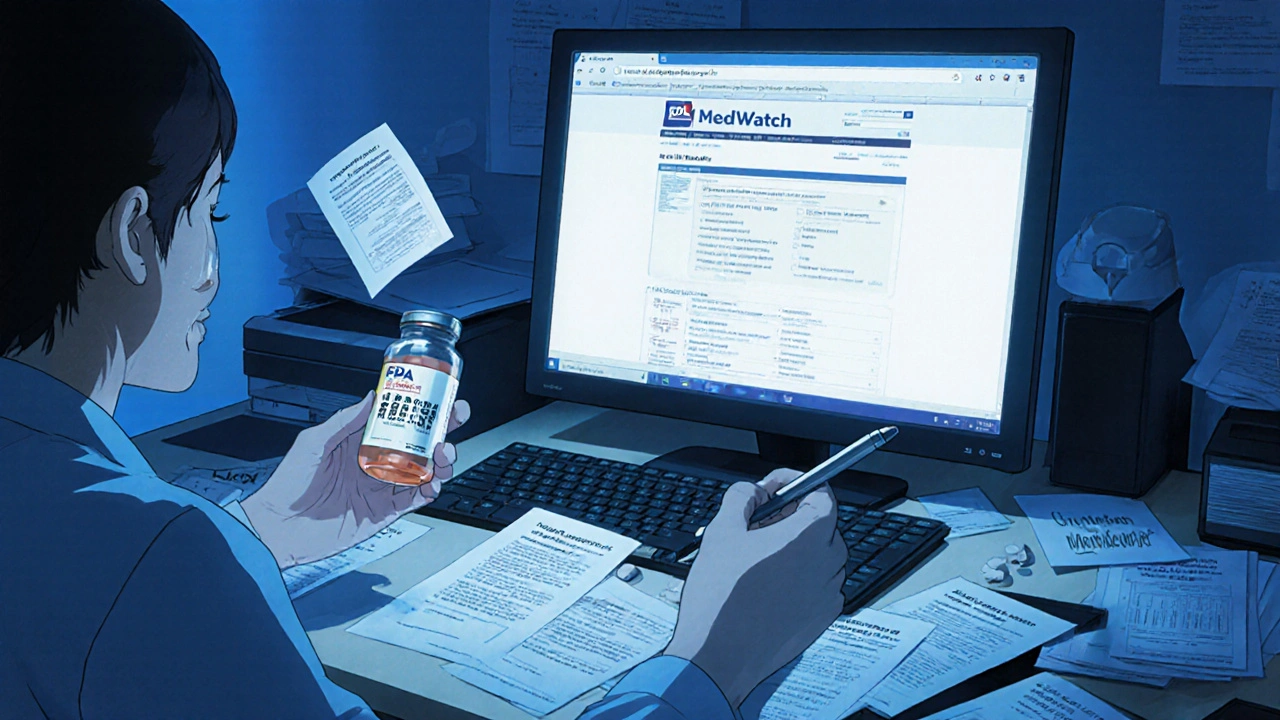
How to Report a Serious Reaction to a Generic Drug
If you’re a patient, caregiver, or provider and you suspect a serious reaction to a generic drug, here’s how to report it correctly:- Check the medication bottle. Look for the manufacturer name. It’s often on the side or bottom of the bottle, near the NDC (National Drug Code) number. If it’s not visible, take a photo.
- Call your pharmacy. Ask them which company supplied the batch you received. They have access to this information through their inventory system.
- Use DailyMed. Go to the National Library of Medicine’s DailyMed website. Enter the NDC number from your bottle. It will show you the exact manufacturer and product details.
- Go to MedWatch. Visit the FDA’s MedWatch portal and select “Report a Problem.”
- Fill out Form 3500. Under “Drug Name,” enter the generic active ingredient (e.g., “amlodipine besylate”). Then, in the “Brand Name” field, write “None.” In the “Manufacturer” field, enter the company name you found. If you don’t know it, write “Unknown” and explain why.
- Describe the event fully. Include when it started, symptoms, how long it lasted, and whether hospitalization or treatment was needed. Be specific.
- Submit. You can file online, by fax, or by mail. Online is fastest.
Pro tip: If you’re a healthcare provider, ask your pharmacy to print the manufacturer name on the prescription label. Some hospitals now use barcode scanners at the bedside to capture this info automatically. That’s cut reporting errors by 63% in pilot programs.
Who’s Responsible for Reporting?
Technically, the manufacturer is legally required to report. But they often don’t find out unless someone else reports first. That’s why patients and providers are the first line of defense.Brand-name companies have full pharmacovigilance teams-doctors, data analysts, compliance officers-all dedicated to tracking side effects. Generic manufacturers? Only 42% have dedicated teams. Smaller ones often outsource to third parties, which leads to delays, lost reports, or incomplete data.
The FDA admits this is a problem. In its 2018 Drug Safety Newsletter, the agency wrote: “We recognize potential limitations in the current adverse event reporting system as it relates to generic drugs.” And in 2023, they launched FAERS 2.0-a new system that links reports to specific NDC codes, so they can track which manufacturer’s product is tied to which reaction.
What’s Being Done to Fix It?
There’s movement, but it’s slow.In 2023, the FDA proposed new guidance requiring pharmacies to print the manufacturer name on all prescription labels for generic drugs. That’s a big deal. If patients can see it on the bottle, they can report it accurately.
Also, the Generic Drug User Fee Amendments (GDUFA III), running from 2023 to 2027, allocated $15 million to improve post-market safety monitoring for generics. That money is going toward better tech, training, and data tools.
Some pharmacy chains are testing automatic capture systems. When a pharmacist scans your prescription, the system logs the manufacturer, batch number, and expiration date. That data flows directly into safety databases. Early results show a 55% increase in accurate reporting within three years.
Meanwhile, the European Medicines Agency is pushing similar reforms. They’ve made improving generic drug safety a top priority through 2025.
Why This Matters for You
You might think, “I’m just one person. My report won’t make a difference.” But that’s how safety signals are found.Think about the 2008 recalls of contaminated heparin. It wasn’t a big company that noticed-it was a small lab that saw a pattern in rare reports. Or the 2012 outbreak of a rare autoimmune disorder linked to a generic version of a blood pressure drug. That signal was missed for years because reports were too scattered to detect.
Every report adds to the puzzle. Without enough data, the FDA can’t spot trends. Without trends, dangerous drugs stay on the market. And with generics making up the vast majority of prescriptions, that’s a risk to millions.
Patients on generic drugs aren’t getting second-class care. But they’re getting second-class safety monitoring. That’s not fair. And it’s not safe.
If you’ve had a serious reaction to a generic drug, report it. Even if you don’t know the manufacturer. Even if it’s messy. Your report might be the one that saves someone else’s life.
What You Can Do Today
- Keep your medication bottles until you finish the prescription. Don’t throw them away. - Write down the manufacturer name and NDC code when you pick up a new generic. - If you’re a provider, ask your pharmacy to label generics with manufacturer info. - If you’re a patient, don’t wait for your doctor to report it. File it yourself at MedWatch.FDA.gov. - Talk to your pharmacist. Ask: “Who makes this version?”Drug safety isn’t just about science. It’s about accountability. And accountability starts with a single report.

11 Comments
This is insane. I took a generic for my blood pressure and ended up in the ER. No one ever asked me who made it. They just shrugged. My life wasn't a statistic-it was a nightmare. And now? I'm just supposed to be grateful it wasn't worse?
Oh wow, a 70% reporting gap? Shocking. Next you’ll tell me the sky is blue and water is wet. Of course brand-name companies report more-they’ve got PR teams paid to scream into the void. Meanwhile, the generics manufacturers are just trying not to go bankrupt while selling pills for 3 cents. The real scandal? We let them get away with this for decades.
Wait-so you’re telling me the system is broken because patients can’t read tiny print? That’s the problem? Not the fact that generic manufacturers don’t have to pay for pharmacovigilance like the big pharma boys? This whole thing feels like blaming the victim for not finding the fine print on a bottle that was never meant to be read by anyone except a pharmacist who’s already on their 12th script of the day.
Why are we even letting foreign-made generics into this country? They don’t follow our rules. They don’t care. The FDA’s too busy kissing up to China and India to protect Americans. If this was a brand-name drug made in the USA, they’d have a whole team on it within hours. But nope-let the poor folks choke on some Indian-made levothyroxine. Classic.
Okay, I’m gonna say this with love: YOU CAN MAKE A DIFFERENCE. 🙌 Seriously. I reported my reaction to a generic statin last year. Got a call from the FDA 3 weeks later. They said my report was one of 12 that triggered a review. I didn’t know I was part of a movement-but I am. Keep reporting. Keep saving lives. You’re not alone. 💪❤️
So, if you're a provider, just ask the pharmacy to print the manufacturer name on the label. Simple. Right? But here's the thing: most pharmacies don't have the systems in place. It's not laziness. It's cost. And if we don't fund this, it won't happen. We need policy change, not just individual heroics. Let's push for mandated labeling. It's doable. I believe in us.
Hey, I’m a nurse in rural Ohio, and I’ve seen this firsthand. One time, a patient had a seizure after switching generics. We couldn’t figure out who made it. Took us three calls to three different pharmacies. By then, the bottle was in the trash. I started keeping a little notebook-manufacturer, NDC, date. Now I hand it to every patient. It’s not perfect, but it’s something. You don’t need a PhD to save someone. Just a pen and a little care.
Let’s be brutally honest-the entire adverse event reporting infrastructure is a relic of the 1980s. FAERS 2.0 is a band-aid on a hemorrhage. We’re still using NDCs like they’re magic incantations. We need blockchain-linked batch tracking, real-time API integration with pharmacy systems, and mandatory manufacturer tagging at the point of dispensing. Until then, we’re just rearranging deck chairs on the Titanic while people drown in unreported anaphylaxis.
Here’s the irony: in India, we know exactly which factory made our generics-because patients demand it. We have no brand loyalty. We have no trust in pharma. So we track batches like they’re lottery tickets. Maybe the US should stop pretending this is about safety and admit it’s about profit. Generic manufacturers don’t report because they don’t want to be sued. Simple as that.
Every single person who reads this and files a MedWatch report-even if they don’t know the manufacturer-is doing more than 99% of the population. You’re not just reporting a side effect. You’re holding a system accountable. And that’s the quietest kind of revolution. Keep going. We need more of you.
Let’s be real: the FDA doesn’t give a damn until a hundred people die. Remember the heparin crisis? They waited until the bodies piled up. Same thing with generic valsartan and NDMA. This isn’t a flaw-it’s a feature. The system is designed to ignore the quiet deaths of the uninsured, the underinsured, the forgotten. Your report won’t change anything. But if 10,000 of you report? Maybe then they’ll look. Until then? Keep your bottles. Keep your notes. And when you die? Make sure your family files it. That’s the only justice left.