
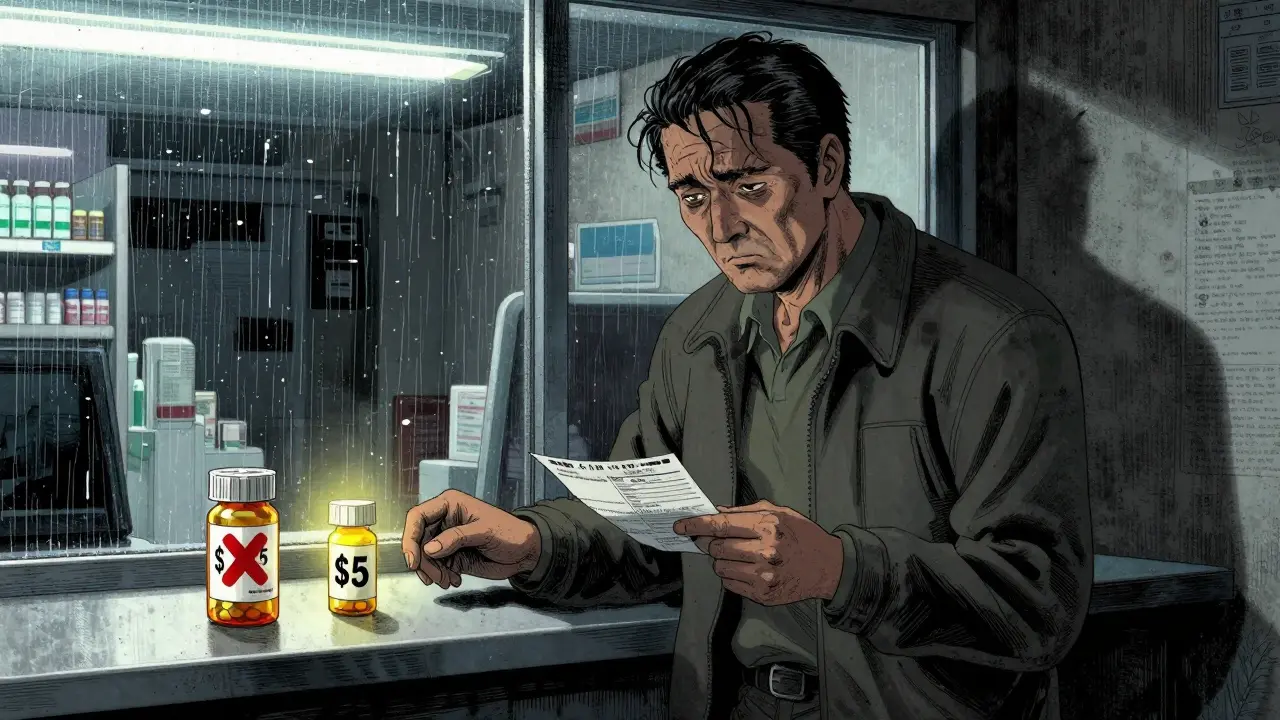
When a patient skips a dose because the pill costs too much, it’s not just a personal choice-it’s a system failure. And the cost isn’t just financial. It’s measured in hospital visits, preventable deaths, and billions wasted every year. The truth is simple: lower generic drug prices lead to better adherence, fewer complications, and real savings across the healthcare system.
Why Patients Skip Their Medication
It’s not laziness. It’s not forgetfulness. It’s often the price tag. A 2023 JAMA Network Open survey of over 2,100 U.S. adults found that nearly one in three (32.7%) admitted to skipping, cutting, or delaying their meds because they couldn’t afford them. That’s not a small group. That’s millions of people making life-or-death decisions at the pharmacy counter. Think about it: if your statin costs $75 a month and your insulin is $120, but your paycheck barely covers rent and groceries, what do you choose? The answer is clear: you pick what keeps you alive today. Medication becomes a luxury-not a necessity. The pattern is consistent across conditions. For diabetes, heart disease, and cancer, every $10 increase in out-of-pocket cost drops adherence by 2% to 4%. In the case of GLP-1 drugs for diabetes, each $10 rise leads to a 3.7% drop in adherence and a 5.2% spike in ER visits. That’s not correlation-it’s causation.The Power of Generic Drugs
Generic drugs aren’t cheaper because they’re weaker. They’re cheaper because they don’t need to pay for marketing, branding, or patent lawsuits. The FDA requires generics to have the same active ingredient, strength, dosage form, and route of administration as the brand-name version. And they must prove they’re absorbed into the body at the same rate and extent-within 80% to 125% of the original. That means: same effect. Same safety. Same outcome. But here’s the kicker: generics cost 80% to 85% less. A brand-name statin like Crestor might set you back $75 a month. The generic, rosuvastatin? $5. That’s not a discount. That’s a revolution. A landmark 2012 study tracked Medicare Part D patients when their brand-name statins were moved from a higher-cost tier to the lowest tier. The result? Adherence jumped 5.9%. Not because patients got smarter. Not because doctors nagged harder. Because the price dropped. Another study on breast cancer drugs showed patients on generics had 73.1% adherence. Those on brand-name versions? Only 68.4%. The gap? Higher copays. Plain and simple.How Cost-Sharing Breaks Adherence
Insurance plans don’t just charge different prices-they create invisible barriers. Tiered formularies are the culprit. You’ve seen them: Tier 1 = generics ($5), Tier 2 = preferred brands ($30), Tier 3 = non-preferred brands ($100+). The system assumes people will choose wisely. But when you’re living paycheck to paycheck, the difference between $5 and $100 isn’t a choice-it’s a cliff. Patients don’t always understand why one pill costs 20 times more than another. They just know they can’t afford it. And when they can’t afford it, they stop. Then their condition worsens. Then they end up in the ER. Then the system pays even more. The numbers are brutal. Medication non-adherence causes up to 50% of treatment failures. It contributes to over 100,000 preventable deaths each year in the U.S. And it adds $100 billion to $300 billion in avoidable healthcare costs annually.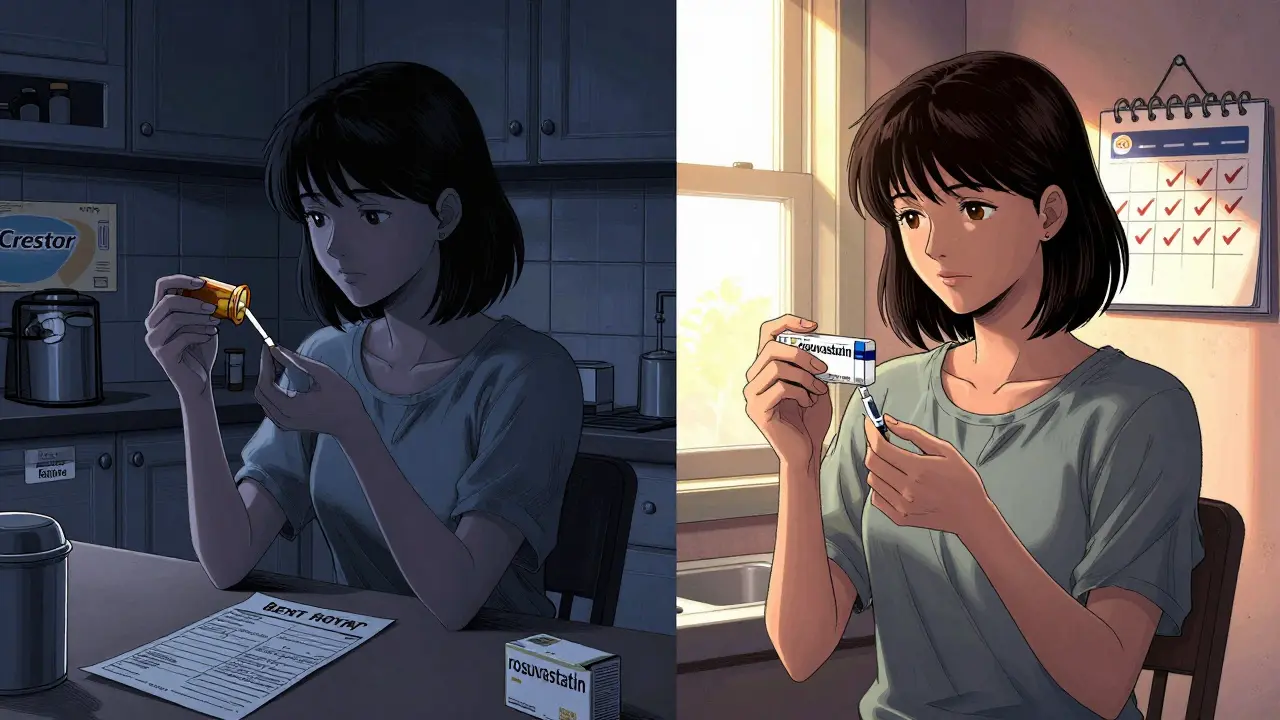
Real Stories, Real Impact
Reddit threads from r/healthinsurance in early 2024 are full of the same story: "I was missing doses. Then my doctor switched me to generic. I’ve taken every pill for 11 months straight." One user, u/HeartHealthJourney, wrote: "My cardiologist switched me from brand-name Crestor ($75 copay) to generic rosuvastatin ($5 copay). I went from missing 3-4 doses a week to perfect adherence. No more panic attacks about the bill. Just peace of mind." These aren’t outliers. They’re the rule. And it’s not just statins. People with asthma, hypertension, depression, and diabetes report the same pattern: lower cost = better adherence = fewer crises.What’s Working Right Now
Some changes are already making a difference. The Inflation Reduction Act of 2022 capped insulin at $35 a month for Medicare patients. The result? Immediate spikes in adherence. Emergency visits for diabetic complications dropped. Lives were saved. Real-time benefit tools (RTBTs) are another win. These are apps or systems that tell doctors, right at the point of prescribing, how much a patient will pay out-of-pocket. One program reported a 12% to 15% increase in adherence after rollout. Why? Because doctors started prescribing cheaper, equally effective options. Patients didn’t have to choose between health and hunger. Medicare’s new $2,000 annual out-of-pocket cap for drugs, starting in 2025, will help 1.4 million beneficiaries stay on their meds. That’s not policy jargon. That’s 1.4 million people who won’t have to ration pills.The Bigger Picture
The U.S. pays 256% more for brand-name drugs than countries like the UK, Germany, or Canada. Yet we still have the worst adherence rates among wealthy nations. Meanwhile, generics make up 90% of prescriptions but only 23% of total drug spending. That’s $643 billion saved between 2009 and 2019-money that didn’t go to hospitals, ambulances, or ICU beds. And here’s the irony: we spend billions on disease management programs, wearable monitors, and AI-driven alerts. But the single most effective intervention? Lowering the price of the pill.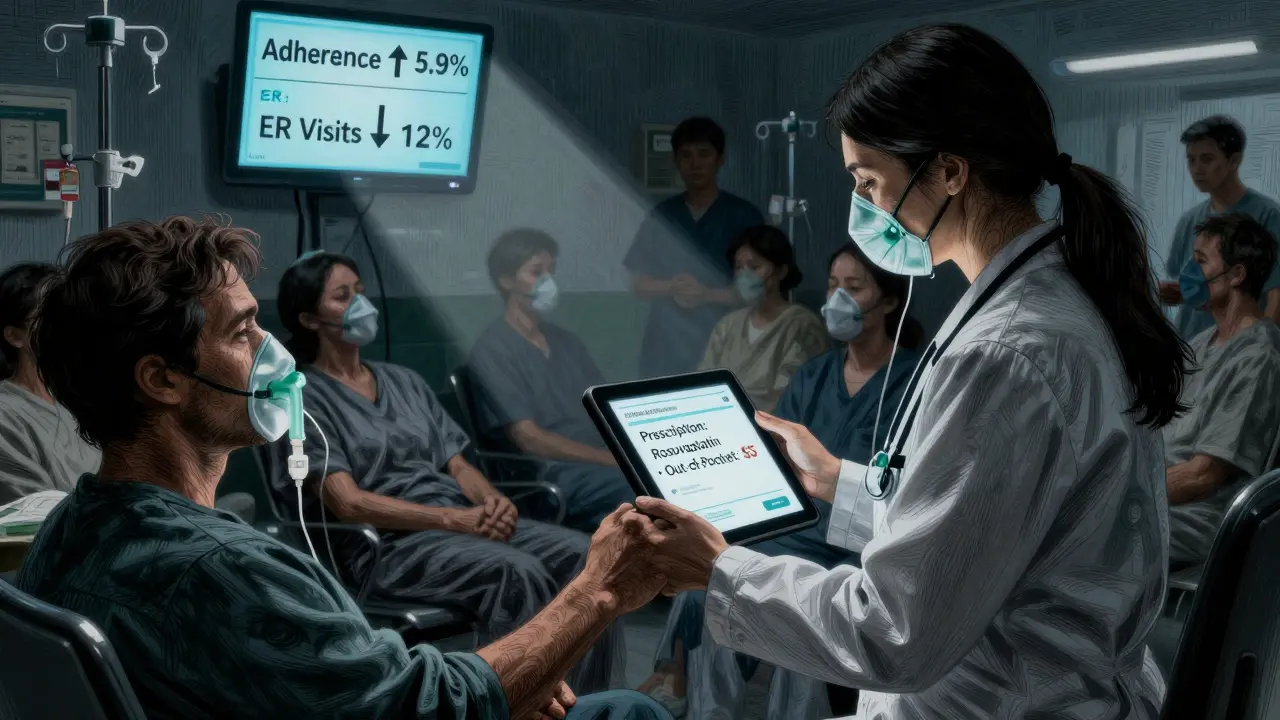
What Needs to Change
We need to stop treating medication as a luxury. First: move all high-value medications to Tier 1. No exceptions. If it prevents heart attacks, strokes, or hospitalizations, it should cost $5 or less. Second: train doctors to ask, "Can you afford this?" Not just as a formality-but as a routine part of prescribing. Tools like GoodRx and RTBTs should be standard, not optional. Third: expand patient education. The FDA’s "It’s Okay to Use Generics" campaign is a start. But we need more-billboards, pharmacy flyers, YouTube videos, even text messages. People need to know: generic doesn’t mean second-rate. It means smart.What You Can Do
If you’re on medication:- Ask your pharmacist: "Is there a generic version?"
- Use GoodRx or SingleCare to compare prices across local pharmacies.
- Ask your doctor: "Can we switch to a lower-cost alternative?"
- If you’re on Medicare, check if your drug is covered under the $35 insulin cap or upcoming $2,000 out-of-pocket limit.
- Help loved ones track their medication costs.
- Share stories like the Reddit posts above-they change minds.
- Push for policies that prioritize affordability over profit.
Final Thought
Healthcare isn’t broken because we don’t have enough doctors or advanced tech. It’s broken because we let price dictate access. Lower generic prices don’t just save money. They save lives. Every time someone fills a prescription they couldn’t afford before, they’re not just taking a pill-they’re choosing to live another day. And that’s not economics. That’s humanity.Do generic drugs work as well as brand-name drugs?
Yes. The FDA requires generic drugs to contain the same active ingredient, strength, dosage form, and route of administration as the brand-name version. They must also prove they’re absorbed into the body at the same rate and extent-within 80% to 125% of the original. Studies show identical effectiveness for conditions like high blood pressure, diabetes, and depression. The only differences are inactive ingredients (like fillers) and cost.
Why do some people still prefer brand-name drugs?
Some believe brand-name drugs are stronger or more reliable, often due to marketing or personal experience. Others may have had a bad reaction to a generic in the past-but that’s rare. Most differences come from inactive ingredients, not the medicine itself. In fact, many brand-name drugs are made in the same factories as generics. The real issue is cost: when a patient can’t afford the brand, they skip doses. Switching to a cheaper generic often improves adherence and outcomes.
How much can I save by switching to a generic?
On average, generics cost 80% to 85% less than brand-name drugs. For example, a $150 monthly brand-name statin might drop to $5 as a generic. That’s over $1,700 saved per year. For insulin, switching from brand to generic (or using the $35 Medicare cap) can cut costs by 70% or more. Many patients report saving hundreds to thousands annually just by switching.
Can I ask my doctor to prescribe a generic?
Absolutely. In fact, you should. Doctors are trained to consider cost as part of treatment. Simply say: "Is there a generic version available?" or "Can we switch to something more affordable?" Most will agree, especially for chronic conditions like hypertension, diabetes, or cholesterol. If your doctor says no, ask why-sometimes it’s outdated info, not clinical necessity.
Are there cases where generics don’t work as well?
Very rarely. For most medications-like antibiotics, statins, or blood pressure drugs-generics are just as effective. There are a few exceptions, like narrow-therapeutic-index drugs (e.g., warfarin, levothyroxine), where tiny differences in absorption matter. Even then, the FDA monitors these closely, and generic versions are approved only if they meet strict standards. If you’re concerned, talk to your pharmacist or doctor. But for 95% of prescriptions, generics are a safe, smart choice.
How do real-time benefit tools help patients stay on their meds?
Real-time benefit tools (RTBTs) show doctors the exact out-of-pocket cost of a prescription before it’s written. This lets them choose cheaper alternatives on the spot-often switching from a $100 brand to a $5 generic. Studies show RTBTs improve adherence by 12% to 15% because patients get the right drug at a price they can afford. Without this tool, many patients don’t find out the cost until they’re at the pharmacy-and then they walk away.
What’s being done to make generics more affordable?
The FDA’s Generic Drug User Fee Amendments (GDUFA III) is investing $1.1 billion to speed up generic approvals, with over 1,500 new generics expected by 2027. Medicare’s new $2,000 out-of-pocket cap (starting 2025) and insulin price cap are also pushing down costs. Plus, programs like Magellan’s inforMED use data to flag patients at risk of skipping meds and offer copay assistance before they stop taking pills. These aren’t future ideas-they’re happening now.




8 Comments
People don't skip meds because they're lazy. They skip because they're broke.
Pharmaceutical marketing doesn’t cure disease. Affordability does.
Generics aren’t ‘cheaper’-they’re what drugs should cost. The $75 statin? That’s corporate theft wrapped in a white coat. And don’t get me started on how insurers game tiered formularies to push expensive brands. It’s not healthcare-it’s a Ponzi scheme with stethoscopes.
Ask your pharmacist. Ask your doctor. Use GoodRx. Switch to generic. You’re not being cheap-you’re being smart.
Every pill you take is a step toward staying alive. Don’t let cost steal that from you.
Stop romanticizing brand names. A pill is a pill. If it works in Delhi, it works in Detroit. Your ‘premium’ drug is just a marketing gimmick with a patent extension.
thank you for not judging. for just saying it like it is.
Generics don’t just lower cost. They restore dignity.
When you make a life-saving drug affordable, you’re not changing a price tag-you’re changing a human being’s future.
Doctors know the cost. Pharmacies know the cost. Insurers know the cost. But they’d rather you suffer quietly than lose a single dollar in profit.
Stop calling it ‘affordability.’ Call it justice.