
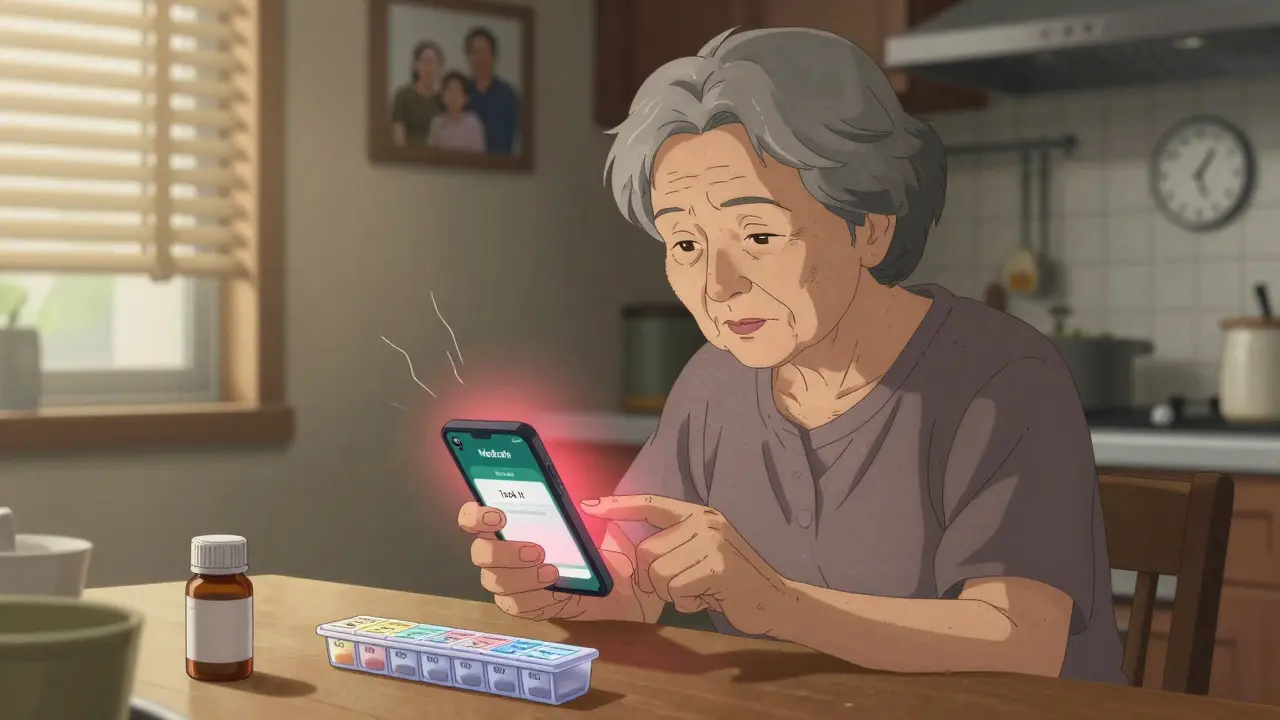
Taking your pills on time isn’t just a good habit-it’s often the difference between feeling okay and ending up in the hospital. About half of people with chronic conditions like high blood pressure, diabetes, or heart disease don’t take their meds as prescribed. That’s not because they’re forgetful or careless. It’s because life gets busy, regimens get complicated, and reminders fade into the background. But digital tools are changing that. Today’s medication reminder apps aren’t just alarms with a pill icon-they’re smart, personalized assistants that help you stay on track, track your progress, and even talk to your doctor about how you’re doing.
Why Medication Adherence Matters More Than You Think
Skipping a dose here and there might seem harmless, but the numbers tell a different story. In the U.S. alone, poor medication adherence costs the healthcare system between $100 billion and $289 billion every year. That’s not just money-it’s emergency room visits, hospital stays, and preventable complications. The World Health Organization flagged this problem back in 2003, and since then, research has only confirmed how big it is. For someone managing diabetes, missing insulin doses can lead to nerve damage or kidney failure. For someone on blood thinners, skipping a pill could trigger a stroke. These aren’t hypothetical risks-they’re real, measurable outcomes.
And here’s the twist: the people who need these tools the most-older adults, low-income patients, those with multiple chronic conditions-are often the least likely to use them. Why? Because many apps assume you’re tech-savvy, have a reliable phone, and understand how to set up notifications. But the best apps today are fixing that. They’re simpler, more intuitive, and designed with real users in mind.
How Medication Reminder Apps Actually Work
These apps don’t just buzz at 8 a.m. and 8 p.m. The smart ones learn your habits. They notice if you usually take your pill 15 minutes after the alarm, and adjust. They let you log whether you felt sick after taking it, if you missed it because you were out, or if you ran out. Some even connect to your pharmacy to alert you when refills are due.
Most apps run on iOS 13+ and Android 8+, syncing your data across your phone, tablet, or even a family member’s device. That’s crucial for caregivers helping aging parents. Behind the scenes, they use HIPAA-compliant encryption-AES-256 for stored data, TLS 1.2+ for anything sent over the internet. That means your health info isn’t just private-it’s protected like your bank details.
Apps like Medisafe and MyTherapy go further. They integrate with electronic health records through FHIR APIs, so your doctor can see your adherence trends without you having to print out logs. If you’re on ten different meds, the app can flag potential interactions. It can even send a note to your pharmacist if you’re running low on a critical drug.
Which Apps Actually Work? The Evidence
Not all apps are created equal. A 2025 review of 14 top apps in the Journal of Medical Internet Research found that 12 had clear reminder features, and 9 were built for specific conditions-like hypertension or heart disease. The ones designed for single conditions performed better. Why? Because they tailor reminders, educational content, and even the tone of messages to your diagnosis.
Studies show users of these apps are about twice as likely to take their meds as prescribed compared to those using no tools. One meta-analysis found a Cohen’s d effect size of 0.40-meaning these apps are more effective than motivational interviews, educational pamphlets, or even counseling. That’s not a small win. That’s a clinical improvement.
But here’s what’s really interesting: SMS reminders (text messages) have a similar effect size of 0.41. So why use an app? Because apps do more than send texts. They track patterns. They show you graphs of your adherence over weeks. They let you add notes like “felt dizzy after pill” or “took with food.” That kind of data helps your doctor adjust your treatment-not just remind you to take it.
Top 5 Medication Reminder Apps in 2026
- Medisafe: The most downloaded app in this space. It supports over 2,000 medications, lets you set custom reminder times for each pill, and has a feature that predicts when you’re likely to miss a dose based on your history. Its AI update in June 2025 improved sustained use by 15%. Users rate it 4.7/5 on iOS.
- MyTherapy: Known for its clean interface and visual progress charts. It tracks mood, symptoms, and side effects alongside medication intake. Popular among patients with depression or chronic pain. Rated 4.6/5 on Android.
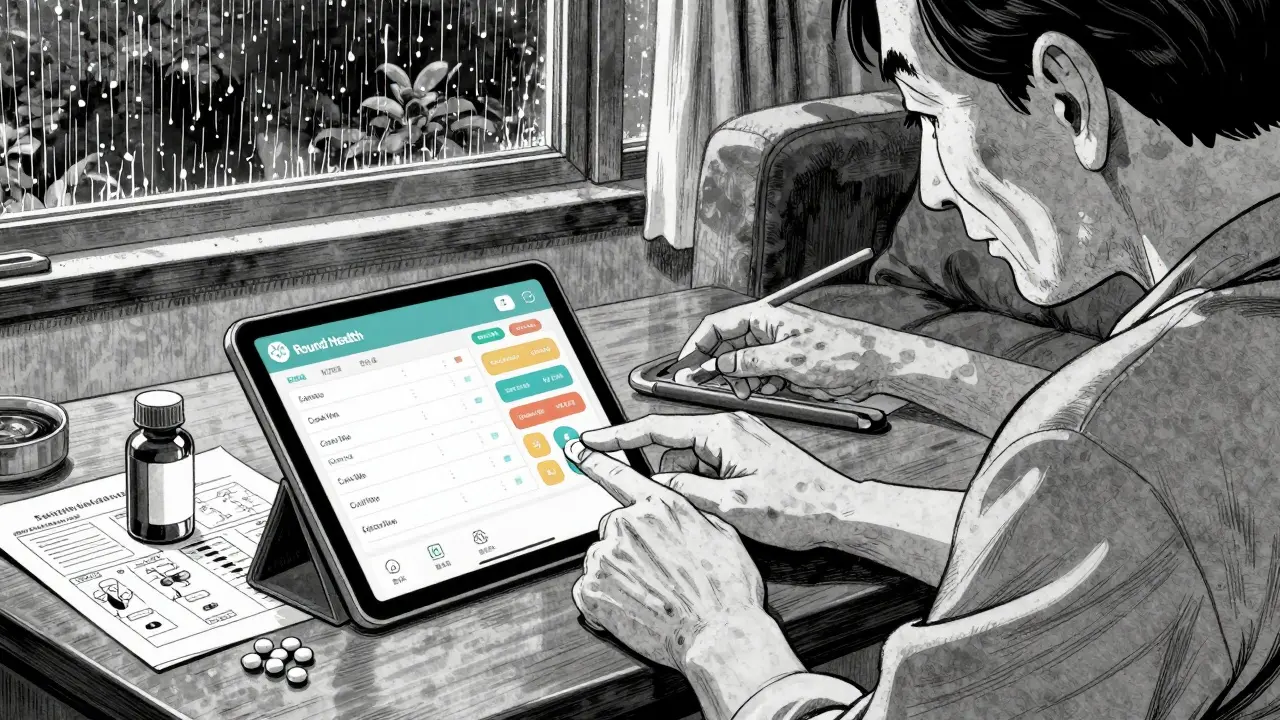
- Round Health: Designed for caregivers. Lets multiple family members track one person’s meds. Great for elderly users who need help from children or nurses. Includes a “Call Me” button that texts a designated contact if a dose is missed.
- CareZone: Combines medication tracking with a digital pharmacy organizer. Stores pill bottles, insurance info, and doctor contacts in one place. Ideal for people managing complex regimens with many providers.
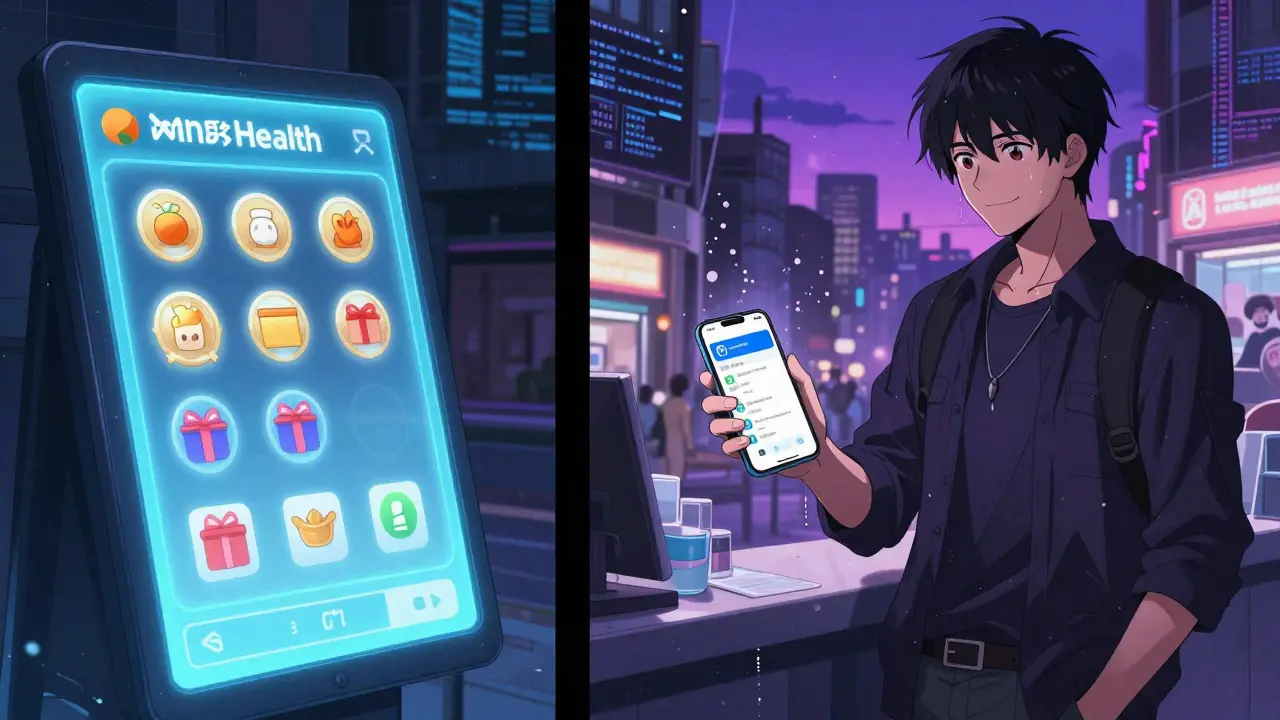
- Mango Health: Uses rewards and gamification. Earn points for on-time doses that can be redeemed for gift cards. Particularly effective for younger adults and those with mental health conditions.
These five apps account for 63% of all downloads, according to Sensor Tower. The rest? Many are outdated, poorly maintained, or lack critical features like cloud backup or multi-user support.
What Makes an App Truly Effective?
It’s not about flashy graphics or a million features. It’s about personalization. A 2023 study from University College London found that apps using AI to tailor messages based on your beliefs, mood, age, and disease duration were far more effective than generic ones.
For example: if you believe “meds are for weak people,” the app might gently challenge that thought with a short video from someone who started the same way. If you’re tired after work and often skip your evening pill, the app might shift your reminder to lunchtime. That’s not just convenience-it’s behavioral science in action.
Also, the best apps let you control the reminders. Not just the time, but the sound, the vibration pattern, even the message. “Take your blood pressure pill” sounds clinical. “Your heart thanks you-time for your pill” feels human. That small difference matters.
Real People, Real Results
In a 2023 NIH study at federally qualified health centers, patients using Medisafe improved adherence by 43%. That’s huge. And the kicker? The same group had no improvement in medication knowledge or social support-meaning the app didn’t just remind them. It changed their behavior.
Reddit users echo this. One person wrote: “I used to forget my diabetes meds 3 times a week. Now I haven’t missed one in 8 months. The visual log shows me my streak. I don’t want to break it.” Another said: “The app told me my blood pressure was spiking on days I skipped my pill. That made it real.”
But it’s not perfect. Some users report battery drain. Others say notifications sometimes don’t go off-especially on older Android phones. That’s why it’s smart to pair the app with a physical pill organizer if you’re high-risk.
Who Struggles the Most-and How to Help
Older adults are the most likely to benefit from these tools, but least likely to use them. Why? Fear. Confusion. Lack of confidence. But the NIH study found that with just 15 minutes of training, 87% of seniors could set up the app on their own. The average setup time? 22 minutes. That’s less than a coffee break.
Low-income users face another barrier: data costs. Some apps use a lot of background syncing. Look for apps with offline mode or low-data settings. Medisafe and MyTherapy both have them.
And if you’re helping a parent or grandparent, don’t assume they can’t learn. Start simple. Set up one reminder for their most important pill. Show them how to tap “took it” after they swallow it. Then add another. Slowly. They’ll get there.
What’s Next for Digital Medication Tools?
The future is connected. By 2027, 35% of these apps will sync with smart pill bottles that detect when a cap is opened. Imagine your app not just reminding you-but knowing you took it, because the bottle recorded it. That’s already happening in pilot programs.
Apps are also starting to tie into value-based care. If your adherence improves and your hospital visits drop, your doctor’s office might get paid more. That means they’re more likely to recommend-and even pay for-these tools. Some insurers now cover Medisafe as a benefit.
But there’s a warning: many apps vanish. The JMIR review found 7 out of 14 top apps were no longer maintained when researchers checked in 2025. Stick with the big names. Check the last update date. Look for apps backed by hospitals or research institutions.
Getting Started: A Simple Plan
- Write down every medication you take-name, dose, time, reason.
- Download one app (Medisafe or MyTherapy recommended).
- Set up your first three pills. Don’t try to add them all at once.
- Choose a reminder time that matches your routine-after brushing teeth, with breakfast, etc.
- Use the “took it” button every time. No exceptions.
- Check your weekly report. Celebrate streaks.
- After two weeks, add one more pill.
You don’t need to be perfect. You just need to be consistent. And these apps are built to help you stay that way.
Common Questions About Medication Reminder Apps
Are medication reminder apps safe for my health data?
Yes, if you choose reputable apps. Top apps like Medisafe and MyTherapy follow HIPAA rules and use AES-256 encryption to protect your data. They don’t sell your information. Always check the app’s privacy policy before signing up. Avoid apps that ask for unnecessary permissions like your contacts or location.
Can these apps replace my pharmacist or doctor?
No. These apps are tools to help you stay on track-not replacements for medical advice. They can flag potential drug interactions, but they can’t diagnose side effects or adjust your dosage. Always talk to your doctor or pharmacist if you feel worse after starting a new med. Use the app to bring better data to those conversations.
Do I need a smartphone to use these apps?
Most require a smartphone running iOS 13 or Android 8 or later. If you don’t have one, some apps offer basic SMS reminders. Others work with smart pill dispensers that don’t need a phone-just Wi-Fi. Ask your pharmacist if they offer low-tech alternatives.
What if I miss a dose? Will the app judge me?
No. The best apps don’t shame you. They ask why. Did you forget? Were you traveling? Did you feel sick? That data helps them adjust future reminders. Some even send encouraging messages like, “You got 9 out of 10 doses this week-way to go.” It’s about progress, not perfection.
Are these apps covered by insurance?
Most aren’t covered yet-but that’s changing. Some Medicare Advantage plans and private insurers now offer Medisafe or MyTherapy as a free benefit. Check with your plan. Even if not covered, the apps are free to download. The value comes from avoiding costly hospital visits down the road.
Final Thoughts: It’s Not About Technology. It’s About Trust.
The real power of these apps isn’t in the notifications. It’s in the quiet consistency they build. You start to trust yourself again. You stop feeling guilty for forgetting. You stop making excuses. You see your progress-not just in numbers, but in how you feel.
Medication adherence isn’t about being perfect. It’s about showing up, day after day. And with the right tool, you don’t have to do it alone.



14 Comments
Okay but why does every app think I’m a robot who takes pills at exactly 8am and 8pm? I take mine after coffee, after lunch, and sometimes right before bed because my schedule is chaos. Also why do they all use the same damn bell sound? I need a sound that makes me laugh, not one that makes me want to throw my phone out the window.
OMG I just found out my grandma’s been using Round Health and it’s like a digital family huddle?? Her son in Toronto gets a text if she misses a dose and her nurse in Vancouver gets a weekly report?? I’m crying. This is the future. Canada’s got nothing on this. Wait no-this is global. I’m so proud. 🇨🇦❤️
So apps can track if you take your meds but they cant fix the fact that your prescription costs 300 bucks a month?? Like cool I got my streak but my bank account is in the red. Also why is everyone talking about Medisafe like its the holy grail but its still got that weird notification lag on my old Android? Just saying.
Just wanted to say I’ve been using MyTherapy for 2 years now and it changed my life. I have fibromyalgia and depression and the mood tracker helped me see patterns I never noticed. Like I’d skip my meds on rainy days and feel worse… now I know to prep ahead. Also the charts are so satisfying to look at. My doc even printed one out for my appointment 😊
Y’all act like these apps are magic. They’re not. I’ve got 12 meds, two phones, and a cat who knocks my charger off the table every morning. The app buzzes. I ignore it. I forget. Then I feel guilty. Then I rage-scroll Reddit. Then I take the pill at 3pm. The app doesn’t fix life. It just gives you a little nudge. And sometimes that’s enough. 🤷♂️
While the quantitative efficacy metrics presented in the JMIR meta-analysis (Cohen’s d = 0.40) are statistically significant, one must consider the heterogeneity of adherence measurement methodologies across included studies. Furthermore, the reliance on self-reported intake via app logging introduces potential recall bias, which may inflate perceived adherence rates. Longitudinal data beyond 12 months remains limited in the current literature.
These apps are a Western luxury. In South Africa, most people don’t even have smartphones. We use alarms on basic phones. We write on walls. We rely on church groups and community health workers. Why are you all acting like this is the only way? Your apps are nice, but they’re not solutions. They’re distractions for people who already have privilege.
Bro I just tried Mango Health and got 50 points for taking my meds on time and redeemed them for a free coffee 😍 I never thought I’d be excited to take pills but now I’m like ‘yesss 3 more doses and I get a pizza’ 🍕. My mom thinks I’m crazy but I told her ‘mom this is how I stay alive’ and she cried. So yeah. Gamification works. Who knew?
Look I get it apps are great but have you ever tried using one when you’re on a 12-hour shift, your phone dies, and you’re stuck in a hospital hallway with no charger? I’ve missed doses because the app crashed, or the notification didn’t go off, or the battery died, or my damn phone updated at 3am and reset all my alarms. These apps are fragile. They’re not robust. They’re like a paper umbrella in a hurricane. I still use a pillbox with my name written on it in Sharpie. That’s my tech. That’s my safety net. The app? It’s a bonus. Not the backbone.
Another article about apps. So what? People still die from nonadherence. These tools don’t fix systemic issues. They don’t fix the cost. They don’t fix the lack of access. They don’t fix doctors who don’t care. This is just tech-washing. You’re giving people a shiny toy so you don’t have to fix the broken system.
Medisafe works. I’ve been using it for 18 months. 98% adherence. 🙌 But I still keep my old pill organizer. Just in case. 😅
Ugh I can’t believe people still use these apps. Like, why not just put a sticky note on your mirror? Or set an alarm on your watch? Or… I don’t know… BE RESPONSIBLE?? 🙄 You’re not a toddler. You’re not a dog. You’re an adult. Take your damn pills. And stop pretending technology is your savior. #Adulting
It’s not about the app. It’s about the consistency. The app is just the tool that makes consistency possible. I’ve seen people who couldn’t remember to drink water suddenly start taking 10 pills on time because the app gave them a visual streak. That streak became part of their identity. ‘I’m the person who doesn’t miss pills.’ That’s powerful. That’s not tech. That’s psychology. And it works.
Let me tell you something about these apps. I’m from Texas and I’ve got my whole family on Medisafe. My mom, my uncle with diabetes, my cousin with epilepsy - all synced. My aunt in Houston got a notification last week because she missed her pill and my cousin in Austin got a text saying ‘She didn’t take it. Call her.’ She called. She went over. She made her take it. That’s not an app. That’s family. That’s love. And yeah, I’m gonna brag about it because this is the future and it’s beautiful. 💪🇺🇸