
Performance Drug Health Impact Calculator
Assess Your Health Risk
This tool estimates potential health impacts based on your usage patterns. Results are for informational purposes only and do not replace medical advice.
Your Health Risk Assessment
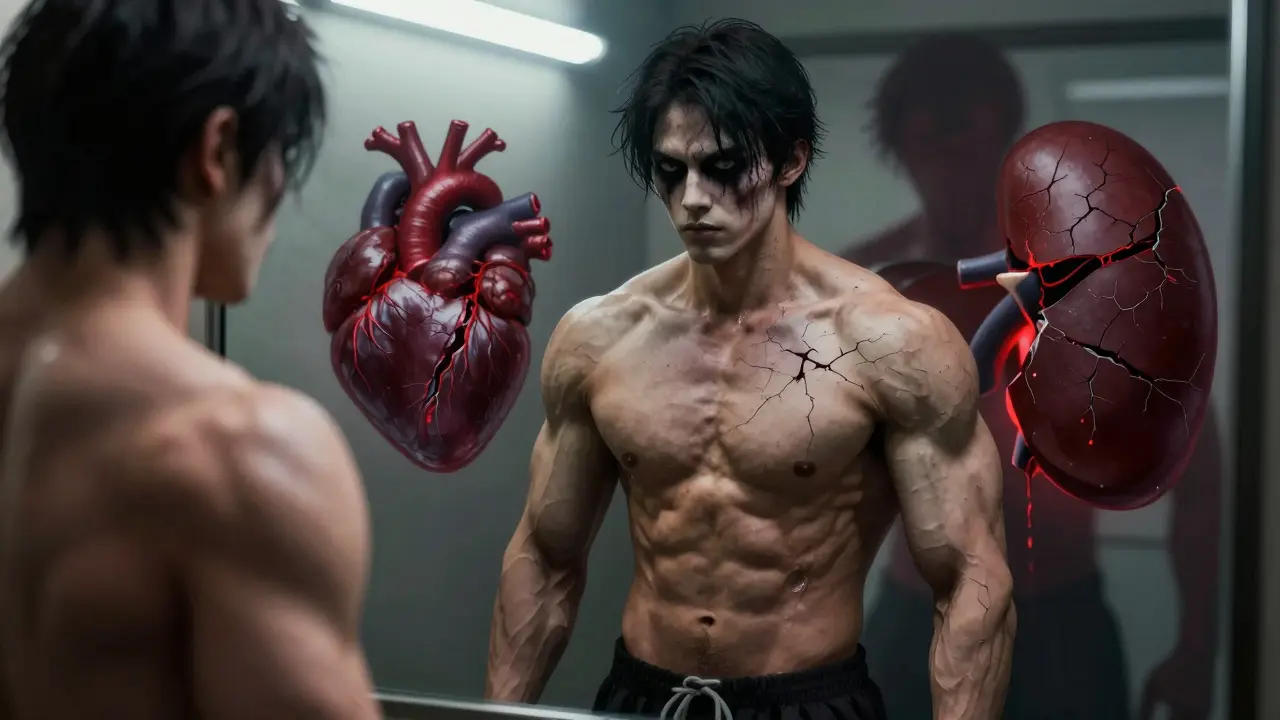
Heart Health
Increased cardiac mass: 0%
Risk of heart attack increases with duration of use
Liver Health
Elevated liver enzymes: 0%
Oral steroids especially dangerous to liver
Hormonal Balance
Testosterone levels: 0%
Recovery can take 6-12 months after stopping
Kidney Health
Reduced kidney function: 0%
Chronic kidney disease risk increases with use
Recovery Time
6-12 months
Hormonal balance recovery varies by individual
Health Aging
10-15 years
Equivalent to cardiovascular aging according to Mayo Clinic
For many athletes, the line between training hard and taking shortcuts has become dangerously thin. What started as a secret among elite competitors has now seeped into gyms, fitness centers, and home workout routines across the UK and beyond. Performance-enhancing drugs aren’t just about winning medals anymore-they’re being used by people who just want to look bigger, recover faster, or push through another workout. But behind the quick gains lie serious, often permanent, health risks that most users never see coming.
What Are Performance-Enhancing Drugs Really Doing to Your Body?
Anabolic steroids, stimulants, growth hormone, and blood doping aren’t magic pills. They’re powerful chemicals that force your body to do things it wasn’t designed to do. Take anabolic steroids: they mimic testosterone, tricking your muscles into growing faster and stronger. In just 6 to 12 weeks, users can gain 10-20% more muscle than they ever could naturally. That sounds appealing-until you learn what else is happening inside.
Your heart starts to thicken. Studies show steroid users develop 27-45% more cardiac mass than non-users, even after accounting for body size. This isn’t healthy growth. It’s scarring. The heart’s ability to pump blood drops by 8-12% in chronic users. One study found that athletes as young as 28 were suffering heart attacks because their hearts had become stiff and overworked. This isn’t rare. It’s predictable.
Then there’s your liver. Oral steroids like oxymetholone or stanozolol are especially toxic. Up to 68% of users show elevated liver enzymes-clear signs of damage. Some develop liver tumors or peliosis hepatis, a condition where blood-filled cysts form inside the organ. And your kidneys? They’re not safe either. Creatinine clearance drops by 15-25%, meaning your kidneys struggle to filter waste. Long-term users often end up with chronic kidney disease.
The Hidden Hormonal Crash
When you flood your body with synthetic testosterone, your brain thinks it’s getting too much. So it shuts down your own production. After just 8 weeks of use, 90% of male users drop into hypogonadotropic hypogonadism-meaning their natural testosterone falls below 300 ng/dL. Normal levels are 300-1,000. This isn’t temporary. Recovery takes 6 to 12 months, and for some, it never fully returns.
Men report shrinking testicles-down to 2-4 mL in volume (normal is 15-25 mL). Sperm counts plunge below 1 million per mL. Normal is over 15 million. Many end up needing lifelong testosterone replacement therapy. Women face different but equally devastating changes: voice deepening that doesn’t reverse, clitoral enlargement over 2.5 cm, and permanent facial hair growth. In 35% of female users, these changes stick around even after stopping.
And then comes the mental toll. Eighty-three percent of recreational users report severe mood swings. Irritability, aggression, paranoia-these aren’t just side effects. They’re symptoms of chemical imbalance. When users stop, depression hits hard. Sixty-seven percent experience clinical depression during off-cycles. One Reddit user wrote: “I gained 25 lbs of muscle in 10 weeks. Lost it all in 8 weeks. And I couldn’t get out of bed for months.”
Why Tendons Snap and Muscles Fail
Strength doesn’t equal durability. When steroids make your muscles grow rapidly, your tendons and ligaments don’t keep up. They stay the same thickness, the same elasticity. The result? Tendons rupture under loads they’d normally handle just fine. The American Academy of Orthopaedic Surgeons documented cases where athletes tore Achilles tendons lifting weights they’d handled safely for years-before steroids.
It’s like putting a sports car engine in a bicycle frame. The engine (muscle) is powerful. The frame (connective tissue) isn’t. That’s why tendon injuries are now one of the most common reasons athletes under 30 end up in surgery.
The Rise of the “Safe” Alternatives
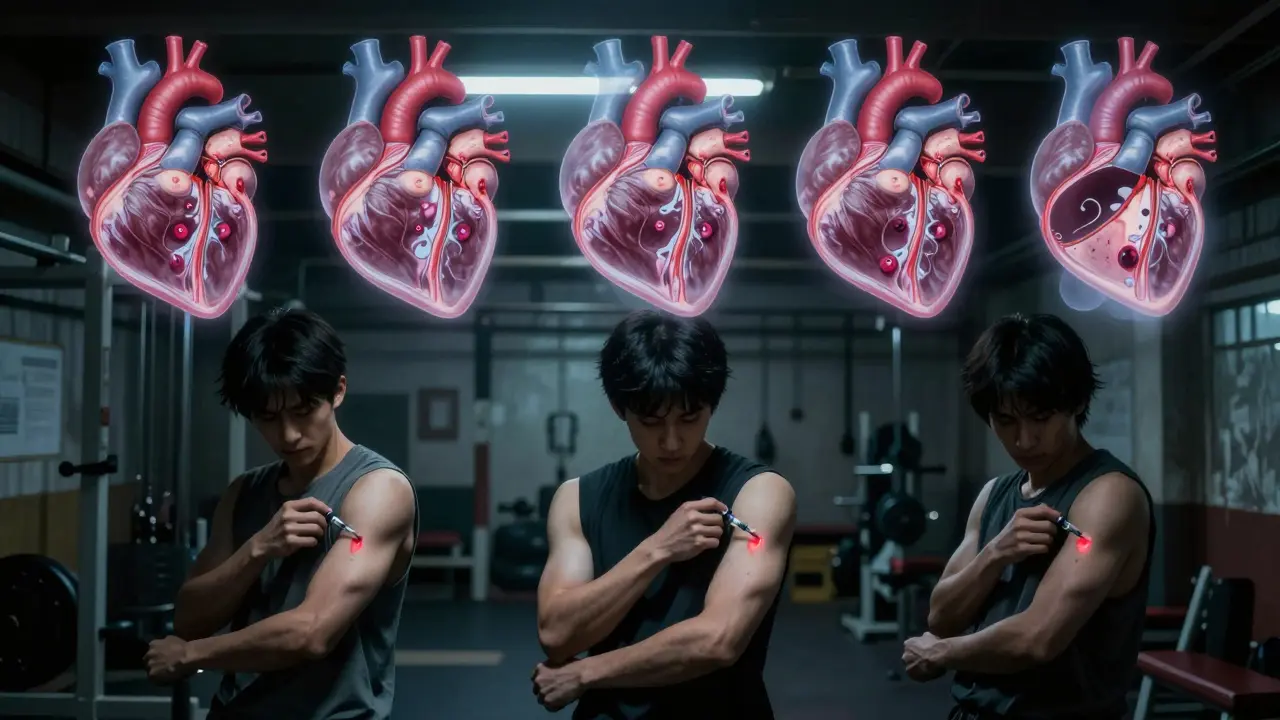
Many users think SARMs (selective androgen receptor modulators) are safer. They’re marketed as “legal steroids” or “research chemicals.” But here’s the truth: 89% of SARMs products tested by the FDA contain completely different, unlisted substances. Some have been linked to liver failure. Others cause heart rhythm problems. There’s no long-term safety data. No clinical trials. Just guesswork and online forums.
Even worse, these substances are sold as “not for human consumption,” which lets sellers avoid regulation. They’re shipped from overseas labs, labeled as “bath salts” or “plant food.” You don’t know what you’re taking. You just know it makes you feel stronger.
Who’s Really Using These Drugs?
It’s not just Olympians anymore. Elite athletes make up only 15-20% of users today. The majority-65-70%-are recreational gym-goers. People who aren’t competing, aren’t getting paid, aren’t under any pressure to perform. They just want to look better, faster. And they’re being sold a lie.
Wellness clinics and anti-aging centers are now major distributors. They offer “bio-identical hormone therapy” for energy, libido, or muscle gain. Many include banned substances like testosterone or hGH. Patients think they’re getting medical care. They’re being doped.
And here’s the kicker: 42% of recreational users admit to using performance drugs. Only 12% tell their doctor. Most doctors don’t even ask. AAFP found that 7 out of 10 family physicians miss signs of steroid use during routine checkups because the symptoms don’t match textbook cases.
The Real Cost of a Quick Fix
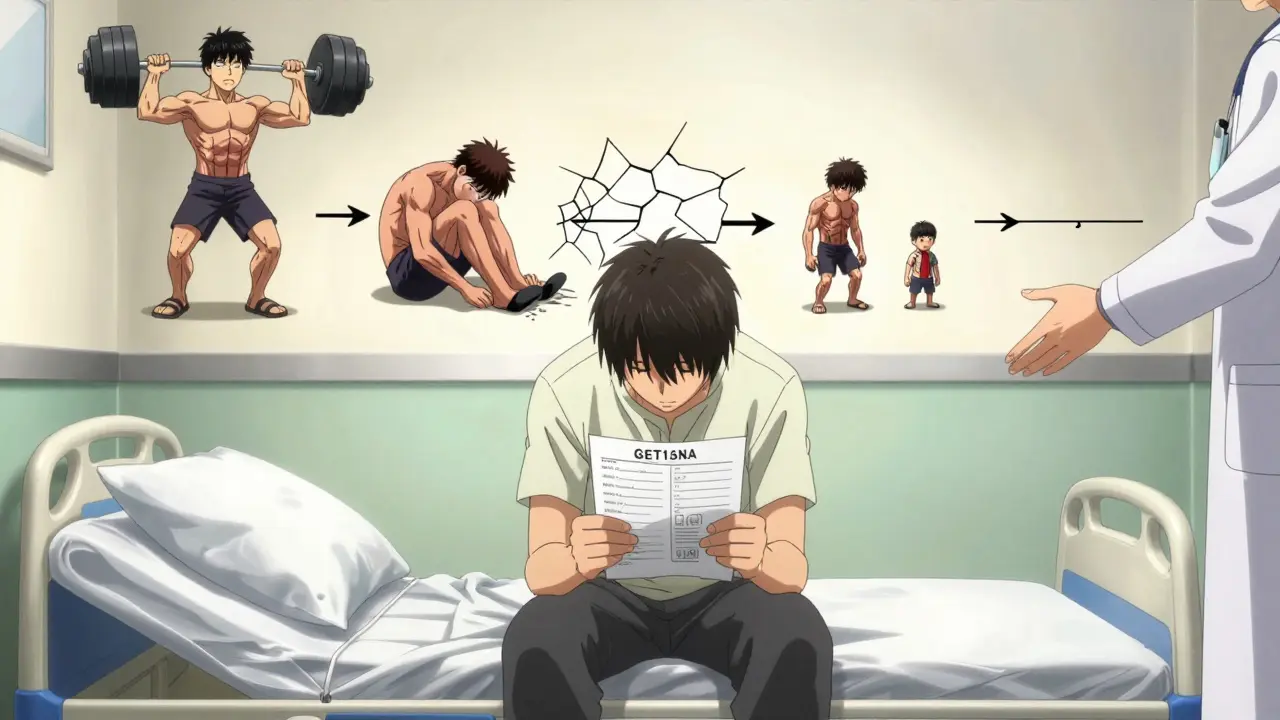
Let’s say you take steroids for 12 weeks. You gain muscle. You feel strong. You post before-and-after photos. But what happens after?
- Your heart is permanently altered-less flexible, more prone to failure.
- Your liver is scarred. Your kidneys are strained.
- Your testosterone levels are broken. You may need injections for life.
- Your mood is unstable. You’ve lost control over your emotions.
- Your tendons are weaker than they were before you started.
The Mayo Clinic says the health damage from steroids is equivalent to aging your cardiovascular system by 10-15 years. That’s not a metaphor. That’s what the scans show.
And for what? A few extra pounds of muscle? A faster recovery? A better-looking physique? The gains are temporary. The damage? Often permanent.
What Should You Do Instead?
If you’re looking to build strength, burn fat, or recover faster, there are proven, safe methods:
- Progressive overload: slowly increasing weight over time builds real, lasting muscle.
- Protein intake: 1.6-2.2 grams per kg of body weight supports muscle repair.
- Sleep: 7-9 hours nightly boosts testosterone and recovery.
- Recovery days: muscles grow when resting, not when lifting.
- Supplements like creatine monohydrate: backed by 30+ years of research, safe, legal, and effective.
There’s no shortcut that doesn’t come with a price. The body adapts to stress-not to chemicals. The strongest athletes aren’t the ones with the biggest doses. They’re the ones who trained consistently, recovered wisely, and stayed patient.
What If You’re Already Using?
If you’ve used performance drugs and want to stop, you’re not alone. But quitting isn’t simple. Your body has been rewired. Hormonal rebalancing can take 6-12 months. In 38% of chronic users, natural testosterone production never fully returns.
Don’t try to detox alone. Seek help from a sports medicine doctor or endocrinologist. Get blood tests: testosterone, LH, FSH, liver enzymes, kidney function, lipid panel. Monitor your mental health. Depression after stopping is common and treatable.
You don’t have to keep going. You don’t have to hide. Recovery is possible. But it starts with honesty-with yourself, and with a doctor who understands what you’ve been through.
Are performance-enhancing drugs banned in all sports?
Yes. The World Anti-Doping Agency (WADA) bans over 250 substances across five categories, including anabolic steroids, stimulants, growth hormone, and blood doping agents. These bans apply to all Olympic and professional sports, and many amateur organizations follow the same rules. Even recreational athletes who aren’t tested are still violating the spirit of fair competition and risking their health.
Can you legally get steroids from a doctor?
Only for specific medical conditions like delayed puberty, muscle-wasting diseases, or hormone deficiencies. Doctors cannot legally prescribe steroids for muscle gain, athletic performance, or anti-aging. Therapeutic Use Exemptions (TUEs) are strictly limited to documented medical needs and require extensive testing. Using steroids for performance enhancement is illegal in most countries, including the UK and US.
Do SARMs really have fewer side effects than steroids?
No. SARMs are unregulated and untested for long-term use. Despite being marketed as safer, 89% of products sold online contain undisclosed, potentially dangerous substances. They still suppress natural testosterone, damage the liver, and affect cholesterol levels. There is no proven safety profile. They are not a safe alternative-they’re a gamble with your health.
How long does it take to recover after stopping steroids?
Recovery varies. Hormonal balance can take 6-12 months, and in some cases, it never fully returns. Muscle gains often disappear within weeks after stopping. Liver and kidney function may improve with time, but heart changes like thickened muscle walls can be permanent. Mental health symptoms like depression often persist for months. Medical supervision is critical during recovery.
Why do so many athletes risk using banned substances?
Many believe the rewards outweigh the risks-faster gains, better appearance, social validation. Social media amplifies this, showing edited “before and after” photos without showing the health costs. Others feel pressured by gym culture or think everyone else is doing it. But the truth is, most users aren’t elite athletes. They’re regular people misled by false promises and misinformation.
Can you test yourself at home for steroid use?
Home test kits for steroids are unreliable and not medically validated. They can give false positives or negatives. The only accurate way to detect steroid use is through a blood test ordered by a doctor, measuring testosterone-to-epitestosterone ratios, hormone levels, and metabolites. If you’re concerned about your health, talk to a professional-not a website selling test strips.



15 Comments
Let’s cut through the noise-steroids aren’t the villain, the system is. The fitness industry sells you a fantasy: quick gains, instant transformation, social validation. Meanwhile, the science is screaming from the rafters. Cardiac hypertrophy, hepatic stress, HPTA suppression-it’s all documented. But nobody wants to hear it because the profit margin on ‘bio-identical’ testosterone is 400%. You think your gym bro is dumb? He’s just the end-user in a multi-billion-dollar pharmacological pyramid scheme.
And don’t get me started on SARMs. Marketed as ‘research chemicals’ to dodge the FDA, but every bottle has a 20% chance of containing a banned androgen receptor agonist that’s never been tested on humans. The FDA flagged 89% of them. Eighty-nine. That’s not a glitch. That’s the business model.
u think this is just about steroids?? nah. the real agenda? the pharmas and the gvo are pushing this so you dont notice the 5g microchips in your protein powder. they want you weak. they want your heart to fail so the hospitals can bill more. the fda is owned by pfizer. they let sarms slide because theyre testing the next gen mind control agents. i saw a video on 4chan where a guy’s testicles shrunk and then his wifi stopped working. coincidence? i think not.
Oh, so now it’s ‘just’ a health issue? Let me guess-you’re the kind of person who thinks ‘natural’ means ‘safe’ and ‘chemical’ means ‘evil.’ You don’t get it. This isn’t about morality. It’s about power. The people who profit from your ignorance are the same ones who control your food, your water, your meds, your gym memberships, and your self-worth. You think you’re choosing to take steroids? No. You’re choosing to survive in a world that tells you you’re not enough unless you’re bigger, faster, stronger. And they’ve rigged the game so the only way to win is to cheat.
And don’t even get me started on the ‘wellness clinics’-they’re not clinics. They’re pharmacies with diplomas. They charge $5,000 a month for ‘hormone optimization’ that’s just a cocktail of banned substances and placebo. Your doctor doesn’t ask because they’re trained to ignore the signs. They’re not negligent-they’re complicit.
You want to know why people don’t stop? Because quitting means facing the truth: you wasted years chasing a lie. And that’s harder than any withdrawal.
It is worth reflecting upon the deeper cultural currents that normalize chemical enhancement as a solution to human insecurity. In societies where worth is measured by physical appearance and productivity, the body becomes a project to be optimized rather than a vessel to be honored. The tragedy is not merely the physiological damage, but the erosion of patience, humility, and acceptance. True strength lies not in the size of one's muscles, but in the courage to remain unchanged while the world demands transformation.
Perhaps the most radical act today is to train without drugs, to recover without supplements, to rest without guilt. To say: I am enough, as I am. This is not weakness. It is wisdom.
bro i took sarms for 8 weeks and gained 12lbs. felt like a god. then i stopped and spent 3 months crying in my room while my girlfriend left me because i ‘wasn’t the same guy.’ now i’m on creatine and trying to be chill. it’s weird how the thing that made you feel powerful also made you feel like trash.
They’re hiding the truth. The CDC knows. The NIH knows. The military knows. They’ve been quietly replacing testosterone in soldiers with synthetic versions since 2012. Why? So they can control aggression levels. You think your gym gains are yours? They’re programmed. The ‘depression after cycle’? That’s the government turning off your emotional override. Wake up.
The fundamental flaw in the entire performance enhancement discourse is the assumption that the body is a machine to be tuned, rather than a dynamic, adaptive system to be respected. When we inject synthetic hormones, we don’t just alter physiology-we disrupt the intricate feedback loops that have evolved over millions of years. The heart doesn’t just ‘thicken’-it loses its natural rhythm of adaptation. The liver doesn’t just ‘get damaged’-it forgets how to metabolize its own byproducts. The brain doesn’t just ‘shut down’ testosterone-it relearns dependence as survival. We’re not building muscle. We’re building dependency. And the worst part? We’re proud of it.
There’s a reason no elite athlete ever says, ‘I got here because I took drugs.’ They say, ‘I got here because I showed up.’ Because the truth is, the body rewards consistency far more than it rewards chemistry. The real performance enhancer isn’t testosterone-it’s time.
As a certified sports performance specialist with over 18 years of clinical experience, I must emphasize that the data presented here is not only accurate but critically underrepresented in public discourse. The physiological consequences of exogenous androgen use are well-documented in peer-reviewed literature spanning three decades. The recommendation to pursue progressive overload, adequate protein synthesis, and sleep hygiene remains the gold standard. Any deviation from this paradigm introduces unnecessary risk with negligible long-term benefit. I urge all individuals to consult with a qualified sports medicine physician before engaging in any performance-altering regimen.
Look, I get it. You think you’re being smart taking ‘legal’ stuff. But you’re not. You’re just the sucker who pays for the scam. Every guy who says ‘I’m not on steroids, I’m on SARMs’ is just trying to feel better about being a drug user. You think your ‘clean’ gains are real? Your bloodwork says otherwise. Your doctor won’t tell you because they don’t care. But I do. You’re not building a better body-you’re building a ticking time bomb. And when it goes off, you’ll be the one begging for a transplant.
And don’t give me that ‘I’m not hurting anyone’ crap. You are. You’re normalizing this. You’re making it okay for 16-year-olds to start popping pills because ‘everyone’s doing it.’ That’s not freedom. That’s surrender.
USA! USA! We don’t need no foreign chemicals to be strong! We got protein shakes and willpower! The real Americans train hard, eat clean, and never touch that European poison! If you’re taking steroids, you’re a traitor to the gym! Go back to India or wherever you came from! We build real men here, not lab rats!
Statistically, the incidence of hepatotoxicity from oral steroids is 68%, yet only 12% of users disclose usage to physicians. This creates a significant diagnostic blind spot. Furthermore, the psychological sequelae-particularly depression post-cycle-are underdiagnosed due to the stigma surrounding substance use in fitness communities. The absence of standardized screening protocols in primary care settings exacerbates the problem. A multidisciplinary approach involving endocrinology, cardiology, and mental health is required. This is not a lifestyle issue. It is a public health crisis.
They’ve been injecting people with synthetic hormones since the Cold War. The CIA tested them on prisoners. The military used them on pilots. Now they’re in your protein powder. You think the FDA is protecting you? They’re the ones approving the ‘research chemicals.’ The whole system is a lie. You’re not gaining muscle-you’re becoming a test subject. And when your heart gives out, they’ll call it ‘natural causes.’
So let me get this straight-you spent 12 weeks turning your body into a chemical warzone… just to look better in a shirt? Congrats. You won the prize of being a walking medical case study. Next time, just wear a muscle suit. At least then you won’t need a liver transplant.
The beauty of human adaptation is that it doesn’t require chemicals-it requires consistency. The body doesn’t crave shortcuts. It craves rhythm. Sleep. Food. Movement. Rest. The most powerful drug isn’t in a bottle-it’s in the discipline to show up, day after day, even when you don’t feel like it. The gains you make naturally? They stick. The ones you force? They vanish. And so do you-slowly, silently, one failing organ at a time.
They sold us a fantasy: ‘Be bigger. Be faster. Be better.’ But the truth? You were already enough. The drugs didn’t make you stronger-they made you afraid of who you were before. And now you’re paying for it with your heart, your liver, your sanity. The real tragedy isn’t the damage. It’s that you believed the lie in the first place.