

Imagine you’re taking a statin to keep your cholesterol in check, and then you get a stubborn fungal infection-maybe a yeast infection or toenail fungus. Your doctor prescribes an antifungal like fluconazole or itraconazole. Sounds straightforward, right? But here’s the hidden risk: statins and certain antifungals can dangerously amplify each other’s side effects, leading to muscle damage so severe it can land you in the hospital.
Why This Interaction Matters More Than You Think
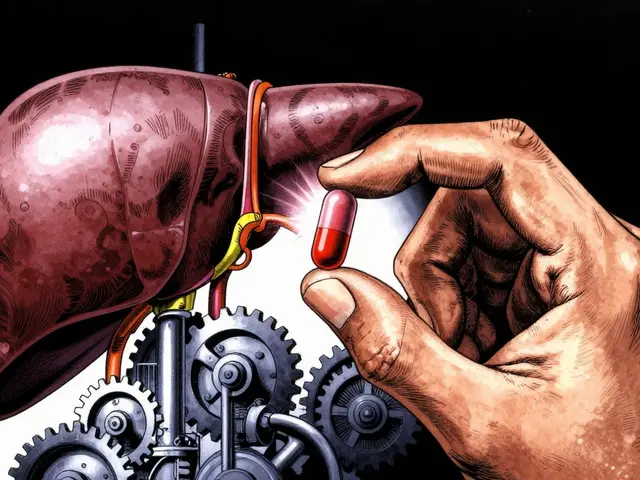
Statins like simvastatin, atorvastatin, and lovastatin are among the most prescribed drugs in the world. Millions of people take them daily to lower cholesterol and prevent heart attacks. Meanwhile, azole antifungals-fluconazole, itraconazole, voriconazole-are commonly used for everything from athlete’s foot to life-threatening fungal infections. When these two classes are taken together, they don’t just coexist-they collide. The problem lies in how your body breaks down these drugs. Many statins rely on an enzyme called CYP3A4 to be processed and cleared from your system. But azole antifungals, especially itraconazole and ketoconazole, are powerful blockers of this same enzyme. When they shut down CYP3A4, statins can’t be broken down properly. That means they build up in your blood-sometimes to levels five or ten times higher than normal.The Real Danger: Rhabdomyolysis
This buildup isn’t just inconvenient. It’s dangerous. The most serious risk is rhabdomyolysis-a condition where muscle tissue breaks down and releases toxic proteins into your bloodstream. These proteins can overwhelm your kidneys, leading to kidney failure. In extreme cases, it’s fatal. A 2016 case report in BMJ Case Reports documented a patient taking simvastatin and itraconazole who developed rhabdomyolysis with muscle enzyme levels over 15,000 U/L (normal is under 200). He was hospitalized, required dialysis, and nearly lost his life. This isn’t rare. Studies show that combining simvastatin with itraconazole increases simvastatin levels by up to 10-fold. The FDA explicitly warns against this combo.Not All Statins Are Created Equal
The risk isn’t the same for every statin. Some are metabolized by CYP3A4, others aren’t. That’s the key to staying safe.- High-risk statins: Simvastatin, lovastatin, atorvastatin (all processed by CYP3A4)
- Moderate-risk: Fluvastatin (metabolized by CYP2C9, so watch out with fluconazole)
- Low-risk: Pravastatin, rosuvastatin (mostly cleared by the kidneys, not the liver)

What About the Antifungals?
Not all antifungals are risky. Azoles like fluconazole, itraconazole, and voriconazole are the main culprits. But there are alternatives.- Avoid: Itraconazole, ketoconazole, voriconazole (strong CYP3A4 inhibitors)
- Consider instead: Terbinafine (for nail fungus), nystatin (for oral thrush), or topical clotrimazole
What Should You Do If You’re on Both?
If you’re already taking a statin and your doctor prescribes an azole antifungal, don’t panic-but don’t ignore it either. Here’s what to ask:- Is this antifungal absolutely necessary? Could a topical version work instead?
- Can I switch to pravastatin or rosuvastatin during this treatment?
- If I must stay on my current statin, what’s the maximum safe dose? (For example, atorvastatin should not exceed 20 mg daily with strong CYP3A4 inhibitors.)
- Should I pause my statin for a few days before and after the antifungal? (Some experts recommend stopping for 2 days before and after treatment.)

The Silver Lining: Could This Interaction Actually Help?
Here’s something surprising: this dangerous interaction might also be useful. Research shows that statins-especially fluvastatin and atorvastatin-have their own antifungal properties. They interfere with cholesterol-like molecules in fungal cell walls. When combined with azoles, they can make the antifungal work better, especially against tough infections like Candida auris, a drug-resistant yeast that’s spreading in hospitals. A 2023 study found that rosuvastatin and voriconazole together were effective against C. auris in 40-60% of tested strains. This isn’t just lab data. The NIH is now funding a major trial called STATIN-AF (NCT05678912) to see if combining low-dose statins with antifungals can improve outcomes in patients with severe fungal infections. So while the risk of muscle damage is real, scientists are also exploring whether we can harness this interaction safely-perhaps even turning a dangerous combo into a life-saving one.What Patients Are Saying
On patient forums, stories are all over the map. One Reddit user, a pharmacist, said they’ve caught 12 dangerous statin-azole combinations in just one quarter-mostly simvastatin and itraconazole for toenail fungus. Another patient on the American Heart Association’s forum described being rushed to the ER after starting fluconazole while on simvastatin. Their muscle enzyme levels were through the roof. But there’s hope, too. A 2022 survey found that 87% of patients who switched to pravastatin or rosuvastatin during antifungal treatment had no issues with their cholesterol control. The key was planning ahead.Bottom Line: Know Your Meds
You don’t need to avoid statins or antifungals. But you do need to be informed.- If you’re on simvastatin, lovastatin, or high-dose atorvastatin, avoid itraconazole, ketoconazole, and voriconazole.
- Ask your doctor if terbinafine or topical antifungals can replace oral azoles.
- Ask if you can switch to pravastatin or rosuvastatin during treatment.
- If you feel unexplained muscle pain, weakness, or dark urine while on both drugs, stop the meds and get help immediately.
Stay informed. Ask questions. Your muscles-and your heart-will thank you.
Can I take fluconazole with my statin?
It depends on which statin you’re taking. Fluconazole inhibits CYP2C9, so it can raise levels of fluvastatin. It has less effect on CYP3A4-metabolized statins like simvastatin or atorvastatin, but the risk still exists. The safest choices are pravastatin or rosuvastatin. Always check with your doctor or pharmacist before combining them.
What are the signs of statin-induced rhabdomyolysis?
Watch for severe muscle pain, especially in the shoulders, thighs, or lower back. You might feel unusually weak or tired. Dark, tea-colored urine is a red flag-this means muscle proteins are leaking into your bloodstream. If you notice these symptoms while taking statins and antifungals together, seek medical help immediately.
Is it safe to take terbinafine with statins?
Yes. Terbinafine doesn’t interfere with the CYP3A4 or CYP2C9 enzymes, so it doesn’t raise statin levels. It’s often the preferred oral antifungal for patients on statins, especially for toenail fungus. It’s just as effective as fluconazole for this use, without the interaction risk.
Can I just lower my statin dose instead of switching?
Sometimes, but it’s not reliable. The FDA recommends limiting atorvastatin to 20 mg daily and simvastatin to 10 mg daily when taken with strong CYP3A4 inhibitors like itraconazole. But even at these doses, risk remains. Switching to pravastatin or rosuvastatin is a safer, more predictable solution.
Why aren’t doctors always aware of this interaction?
Many doctors focus on treating the immediate problem-like a yeast infection-without reviewing all medications. A 2023 study showed only 42% of primary care physicians could correctly identify high-risk statin-azole combinations. That’s why it’s important to bring your full medication list to every appointment and ask: ‘Could this new drug interact with anything I’m already taking?’





10 Comments
Just had to switch from simvastatin to rosuvastatin after my doc prescribed fluconazole for a yeast infection. No issues at all. Seriously, if you're on a high-risk statin, don't wait until you're in the ER to ask about alternatives. Talk to your pharmacist-they know the combos better than most docs.
It's pathetic how many people are so careless with their meds. This isn't some obscure interaction-it's in every pharmacology textbook. People treat their prescriptions like they're picking out a new flavor of yogurt. Simvastatin and itraconazole? That's not a gamble, that's medical malpractice waiting to happen. And now we're supposed to celebrate 'harnessing the interaction' like it's some kind of breakthrough? No. We're supposed to avoid it. Period.
Y'all act like this is news. I'm Nigerian and we've been dealing with this since the 90s. Back home, people just take terbinafine for toenail fungus and call it a day. No statin drama. No hospital trips. Just simple. But here? You got folks on 80mg simvastatin because 'it's cheaper' and then wonder why they can't walk. This ain't rocket science. It's basic. Stop overcomplicating it.
ok but like… i took fluconazole last year and my legs felt like jelly for a week. i thought it was just ‘aging’ or ‘stress’ or whatever. turns out i was on atorvastatin. my doctor was like ‘ohhhhh that’s why’. 🤦♀️ why does no one warn you??
Thank you for writing this. 🙏 I’ve been on rosuvastatin since my doc switched me after I got ringworm. No muscle pain, no scary labs, and my cholesterol’s still great. Also-terbinafine for toenail fungus? Game changer. I did the 12-week course and my nails look normal for the first time in 10 years. No drama, no side effects. Just… better. 💪✨
So let me get this straight. We’ve got a drug combo that can kill you, but now scientists are like ‘oh wait… what if we used this deadly combo to fight super fungi?’ Like… are we playing video games or is this real life? First you tell me don’t mix these, then you say ‘but what if we mix them just right?’ That’s not science, that’s a plot twist in a bad thriller. And don’t even get me started on the fact that 58% of docs still don’t know this. Who’s writing the scripts here?
I’ve seen this play out in my clinic too. A 68-year-old man came in with dark urine and couldn’t lift his arms. Turns out he’d been on simvastatin for 5 years and started itraconazole for a foot fungus. He didn’t know they could interact. He didn’t even know what a statin was. We need better patient education-not just more warnings on labels. Maybe pharmacists should be required to flag these combos at pickup. Simple. Effective.
Wow. So the real villain isn’t the drugs-it’s the system that lets people take them without anyone checking. I mean… I got my meds from CVS and the pharmacist didn’t say a word. Not one. And I’ve been on this combo for 8 months. Thanks, capitalism.
One thing I always tell my patients: if you’re on a statin and your doctor prescribes an antifungal, don’t just say ‘yes’-ask three questions: Which statin? Which antifungal? And what’s the backup plan? It takes 30 seconds. That’s all it takes to avoid a hospital stay. You’re not being difficult-you’re being smart. And if your doctor rolls their eyes? Find a new one. Your muscles are worth it.