
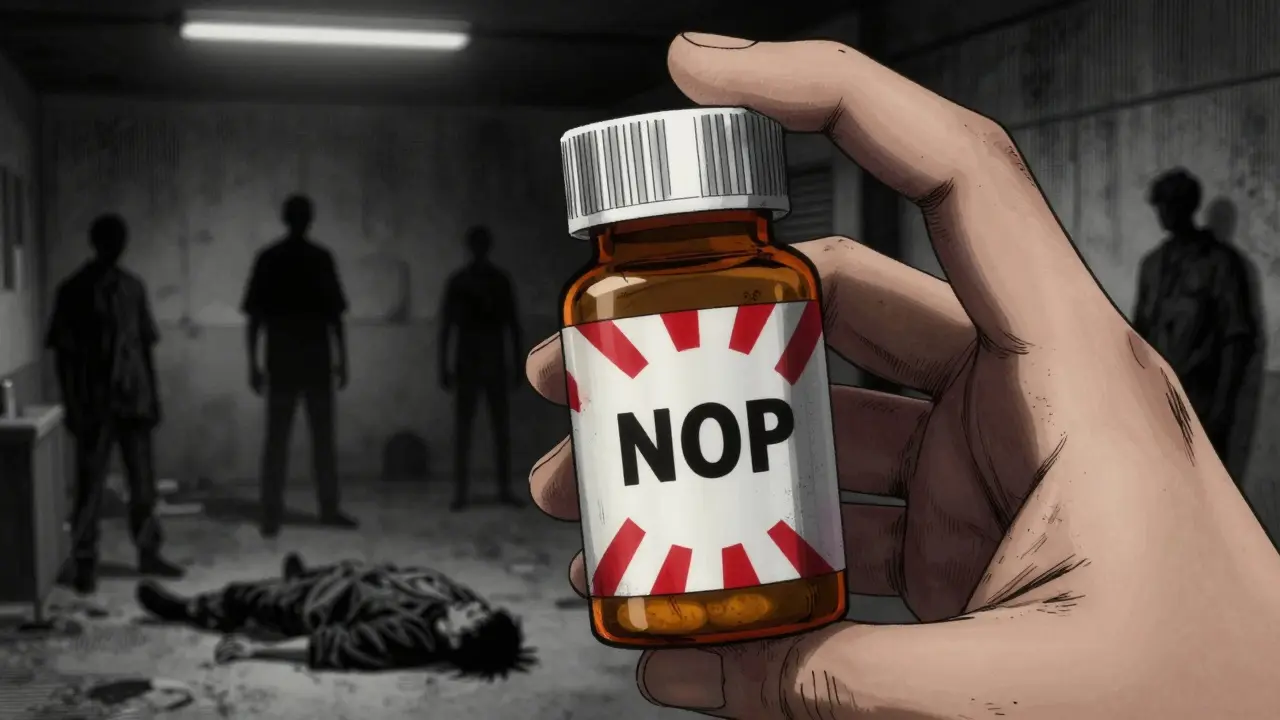
When you pick up a generic pill from the pharmacy, you expect it to work the same as the brand-name version. But what happens when that pill is unsafe? In 2024, the FDA issued 347 drug recalls, and nearly 9 out of 10 of them involved generic medications. Most of these weren’t accidents-they were preventable failures in manufacturing. Understanding what triggers a recall isn’t just about staying informed. It’s about knowing when to question your medication and how to protect yourself.
What Makes a Generic Drug Unsafe Enough to Recall?
Not every labeling mistake or minor flaw leads to a recall. The FDA uses strict categories to decide how serious a problem is. Class I recalls are the most urgent. These happen when a drug could cause serious harm or death. In July 2024, ICU Medical recalled potassium chloride injections because 20 mEq vials were mislabeled as 10 mEq. Giving a patient twice the dose can stop the heart. That’s a Class I recall.Class II recalls involve problems that are serious but usually reversible. In April 2025, Glenmark Pharmaceuticals pulled nearly 40 generic drugs from shelves because of contamination and poor manufacturing practices at its Indian plant. These included common meds like hydroxyzine and metoprolol. Patients didn’t die, but some had bad reactions-dizziness, nausea, or worse. The root cause? Broken equipment, unclean rooms, and staff not following basic hygiene rules.
Class III recalls are the least dangerous. These are for issues like a typo on the box or a wrong color pill. They don’t hurt you, but they break the rules. The FDA still pulls them because consistency matters. If one bottle says “take with food” and the next says “take on empty,” patients get confused-and that’s risky too.
What Are the Top Reasons Drugs Get Recalled?
Recalls don’t happen randomly. They’re triggered by specific, measurable failures. Here’s what shows up most often in FDA reports:- Sterility failures (37% of recalls): Bacteria or mold in injectable drugs. This is the #1 killer in drug recalls. If a vial isn’t sterile, it can cause sepsis.
- Particulate matter (12%): Tiny bits of glass, metal, or plastic in the liquid. These can block blood vessels or trigger immune reactions.
- Labeling errors (9%): Wrong dose, wrong name, wrong instructions. Simple mistakes with big consequences.
- Active ingredient potency issues (7%): Too much or too little of the medicine. A pill with 50% less metformin won’t control blood sugar. One with 200% more could cause a dangerous drop in glucose.
These aren’t guesses. They come from lab tests, patient reports, and inspections. The FDA requires manufacturers to test every batch for sterility, potency, and purity. When those tests fail, the recall clock starts ticking.
Why Are Foreign Factories the Biggest Problem?
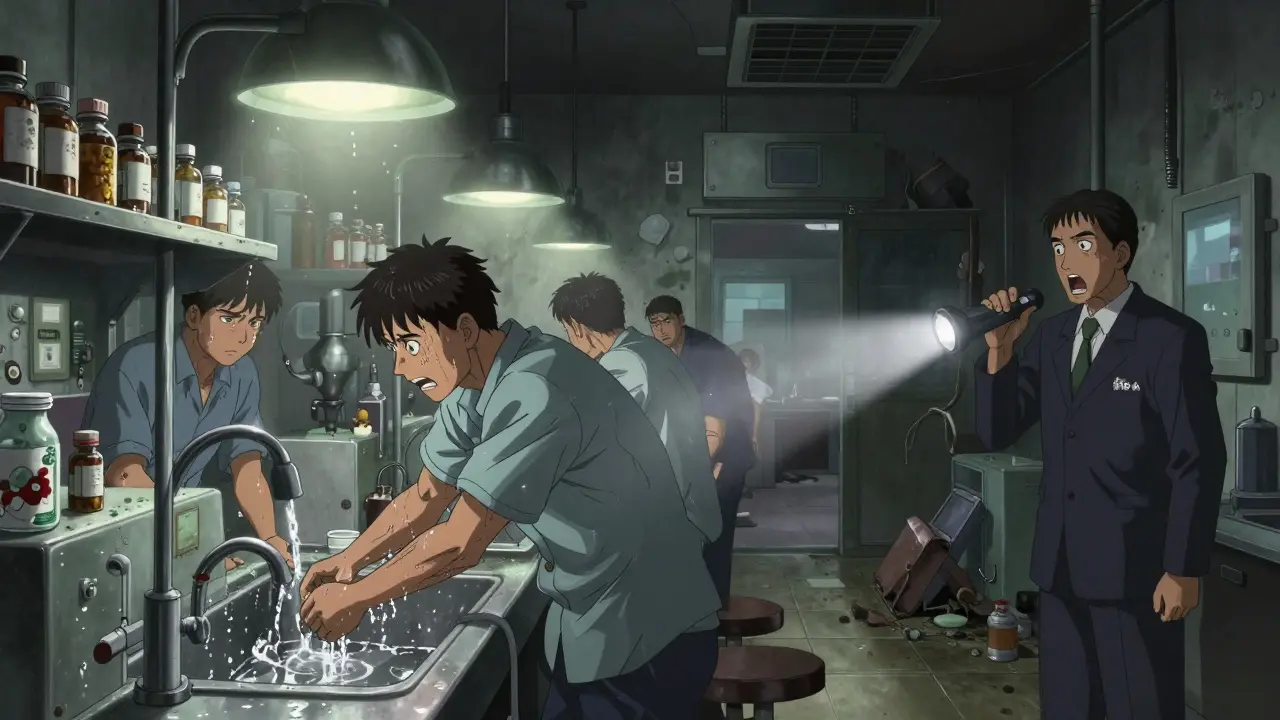
About 80% of the active ingredients in U.S. generic drugs come from India and China. That’s not a secret. But here’s what most people don’t know: the FDA inspects domestic factories every 1.8 years on average. Foreign factories? Once every 4.6 years.The Glenmark case exposed this gap. The FDA hadn’t visited their Indian plant in over four years. Meanwhile, journalists found workers washing equipment in sinks, skipping sterilization steps, and falsifying records. By the time the FDA acted, thousands of patients had already taken the tainted meds.
This isn’t an isolated case. Between 2020 and 2024, Indian manufacturers accounted for 34% of all U.S. generic drug recalls-even though they only make about 20% of the total supply. That means their failure rate is nearly double that of U.S. plants.
Why? Because the system relies on companies to report problems themselves. In the European Union, regulators can force a recall within days. In the U.S., it takes an average of 42 days. That’s more than six weeks of people taking potentially dangerous pills while paperwork gets shuffled.
How Do Recalls Actually Start?
Most recalls begin with someone noticing something’s off. That could be:- A pharmacist who sees two different pill colors in the same bottle.
- A nurse who notices a patient’s blood pressure crashes after taking a new batch of metoprolol.
- A lab technician who finds mold in a sterile solution during routine testing.
- A whistleblower inside a factory who reports safety violations.
Once the issue is flagged, the manufacturer has to investigate. If they confirm a problem, they notify the FDA. The FDA then reviews the data and decides whether to classify the recall and issue a public alert. Sometimes, the FDA finds the problem first during an inspection-or through patient reports in the MedWatch system.
But here’s the catch: only 3.2% of patients ever report bad reactions to the FDA. Most just stop taking the drug and never say anything. That means many problems go unnoticed until it’s too late.
What Happens After a Recall Is Announced?
Once the FDA posts a recall notice, the clock starts for pharmacies and hospitals. They have 24 hours to check their inventory. If they have the affected lot number, they must pull it off shelves immediately. They also have to notify patients-ideally within 72 hours.But in reality, most patients never get a call. A 2025 FDA survey found only 12% of people were contacted directly. The rest had to find out by checking the FDA website, asking their pharmacist, or seeing a news alert. That’s not enough.
Hospitals use automated systems to block recalled drugs from being ordered again. About 76% of large hospitals now have these systems. But small clinics and independent pharmacies? Many still rely on paper lists and manual checks. That’s dangerous.
And then there’s patient anxiety. A 2025 AARP survey showed 78% of people stopped taking a recalled drug immediately-even if the FDA said to talk to their doctor first. That’s understandable. But stopping a blood pressure or seizure med cold turkey can be just as risky as taking a bad batch.
What’s Being Done to Fix This?
The system isn’t broken-it’s outdated. And change is coming.In April 2025, the FDA announced the Enhanced Oversight Initiative. Starting in 2026, the 12% of manufacturers responsible for 67% of all recalls will be inspected every year-not every 4.6 years. That’s a big step.
Also, new laws like the Pharmaceutical Supply Chain Security Act (introduced in May 2025) will require foreign manufacturers to share real-time quality data with the FDA. No more waiting for inspections to catch problems.
Technology is helping too. Blockchain tracking is now used by 18% of major drug makers-up from just 3% in 2023. That means if a bad batch is found, they can trace it to the exact machine, shift, and day it was made. No more guessing.
The FDA is also testing AI tools to predict which factories are most likely to fail. By analyzing patterns in past inspections, supplier records, and even employee turnover rates, the system can flag high-risk plants before a recall happens.
What Should You Do If Your Drug Is Recalled?
You don’t need to panic. But you do need to act.- Check the lot number. Every bottle has one. Compare it to the FDA’s recall list (searchable on fda.gov).
- Don’t stop your medicine unless your doctor tells you to. Abruptly stopping some drugs can be dangerous.
- Contact your pharmacy. Ask if they have a replacement. Most will give you a new batch for free.
- Report any side effects to MedWatch-even if you’re not sure it’s related. Your report could save someone else’s life.
- Ask your doctor if there’s a safer alternative. Sometimes switching brands or manufacturers helps.
Remember: generic drugs are not inferior. Most are safe, effective, and save billions every year. But quality isn’t guaranteed. It has to be earned-every single day, in every factory, for every batch.
What’s Next for Generic Drug Safety?
The FDA admits it’s underfunded. A 2025 government report estimated a $780 million annual gap in funding needed to inspect foreign plants properly. Without that money, inspections will stay rare, and recalls will keep happening.But there’s hope. As more manufacturers adopt continuous manufacturing and real-time quality monitoring, the number of sterility and potency failures is already dropping. Companies that invest in better tech are seeing 22% fewer recalls.
For now, the best protection is awareness. Know your drug’s manufacturer. Check the FDA recall page once a month. Talk to your pharmacist. And don’t assume a low price means low risk. Safety isn’t cheap-but it’s worth more than any savings.
9 Comments
I’ve been on a generic blood pressure med for years and never thought twice about it. But after reading this, I checked my bottle-lot number matches one from last month’s recall. Scary stuff. I called my pharmacy and they swapped it out same day. No drama, just good service. Still, I’m gonna start checking the FDA site monthly. Better safe than sorry.
Also, props to the pharmacist who actually answered my call instead of putting me on hold for 20 minutes. Small wins.
ok so i just found out my metformin was recalled last week and i didnt even know?? like wtf?? i thought generic = same as brand?? now im scared to take anything. also why does the fda take so long?? i mean like if a kid eats a toy with lead paint they shut down the factory in a day. but pills?? nah. take your time. 🤡
There’s a reason I only buy name-brand insulin. Not because I’m rich-because I’m smart. The system is rigged. Foreign factories cut corners. FDA’s understaffed. Patients get caught in the middle. This isn’t healthcare-it’s Russian roulette with a prescription.
But here’s the fix: demand transparency. Ask your pharmacist where the drug comes from. Refuse to fill prescriptions from unknown manufacturers. Vote with your wallet. If enough people do it, the market changes.
Let’s deconstruct the myth of pharmaceutical equivalence. The FDA’s ‘bioequivalence’ standard is a laughable fiction-20% variance in active ingredient? That’s not a margin, that’s a chasm. We’ve normalized pharmaceutical nihilism under the banner of cost-efficiency. The real tragedy isn’t the recalls-it’s that we’ve stopped caring when lives are traded for 37 cents per pill.
And let’s not pretend the Indian manufacturing sector is somehow ‘less ethical.’ It’s just the logical endpoint of neoliberal supply chains: outsource risk, outsource responsibility, outsource accountability. The FDA doesn’t inspect factories-they inspect PowerPoint presentations. The real villain isn’t the factory worker-it’s the C-suite that outsourced ethics to a spreadsheet.
Blockchain? AI? Cute. We need a cultural reckoning. Medicine isn’t a commodity. It’s a covenant. And we’ve broken it. Again. And again. And again.
Until we treat pharmacology like a sacred trust instead of a profit center, we’re just rearranging deck chairs on the Titanic. And someone’s gonna drown. Probably your uncle. Probably mine.
The regulatory framework governing generic pharmaceuticals is a complex interplay of international trade policy, public health imperatives, and fiscal constraints. While the statistics presented are concerning, they must be contextualized within the broader global supply chain ecosystem. The FDA's risk-based inspection model, though imperfect, is aligned with international norms established by the WHO and ICH. That said, the proposed Enhanced Oversight Initiative represents a statistically significant improvement in risk mitigation. Continued investment in real-time monitoring technologies and harmonized regulatory standards will be essential to sustaining public confidence.
It is worth noting that the vast majority of generic medications remain safe and effective, and their availability has contributed to a 40% reduction in U.S. pharmaceutical expenditures since 2010.
As someone from India, I feel deeply saddened by this. Our pharmaceutical industry employs millions, and most factories follow strict protocols. But yes-some corners are cut. It’s not about nationality; it’s about greed and weak oversight. I’ve worked in a lab in Hyderabad-we had audits every 3 months. No one slept on the floor. No one skipped sterilization. But smaller units? They’re desperate. The system fails them too.
Instead of blaming India, let’s demand better global standards. Let’s fund inspections. Let’s pay more for quality. If we want safe medicine, we can’t pretend it’s free.
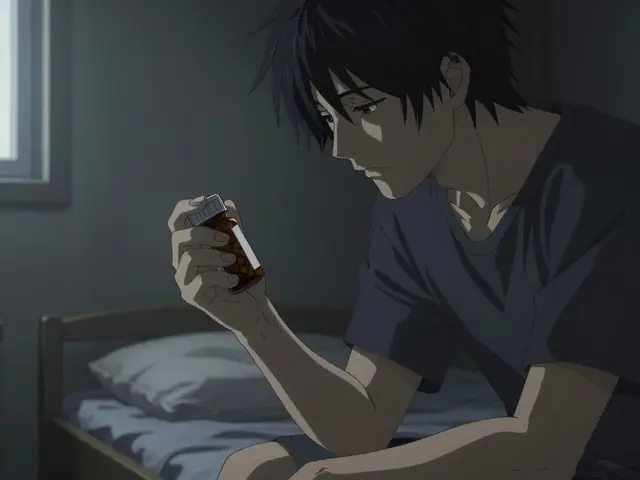
so i took my generic adderall last week and felt like a robot with a headache… then i saw the recall notice. 😳
now i’m just sitting here holding my bottle like it’s a bomb. like… who even checks these lot numbers? nobody. we just swallow and hope. i’m starting a petition: ‘FDA: Text Us When Our Pills Are Toxic’ 🚨💊
also… why is my pill blue this month? last month it was white. are we all just guinea pigs now? 😭
People are so naive. You think the FDA cares? They’re paid by the same corporations that make these drugs. The whole system is a scam. You think they’re gonna shut down a billion-dollar factory? Nah. They’ll just slap a Class II on it and call it a day. And you? You’ll keep taking it because you’re too scared to ask for a brand name.
My cousin died from a contaminated generic. They told her it was ‘just a bad batch.’ It wasn’t. It was negligence. And now she’s gone. And the CEO? He’s on vacation in Bali.
Stop being a good little consumer. Wake up. Your life isn’t worth 30 cents.
Class I recalls: 347. Foreign factories: 80% of API. FDA inspection gap: 2.8x. Patient reporting rate: 3.2%. Fix: increase funding. Done.