Medication-Induced IIH Risk Checker
Step 1: Medication History
Select all that apply to your current or recent medication history:
Step 2: Symptom Check
Are you experiencing any of the following?
While some people develop this condition spontaneously, about 10-15% of cases are triggered by the very drugs meant to help them. The danger is that these symptoms are often dismissed by doctors as simple stress or tension headaches, creating a window of risk where the eyes are slowly losing their ability to see.
The Red Flags: More Than Just a Headache
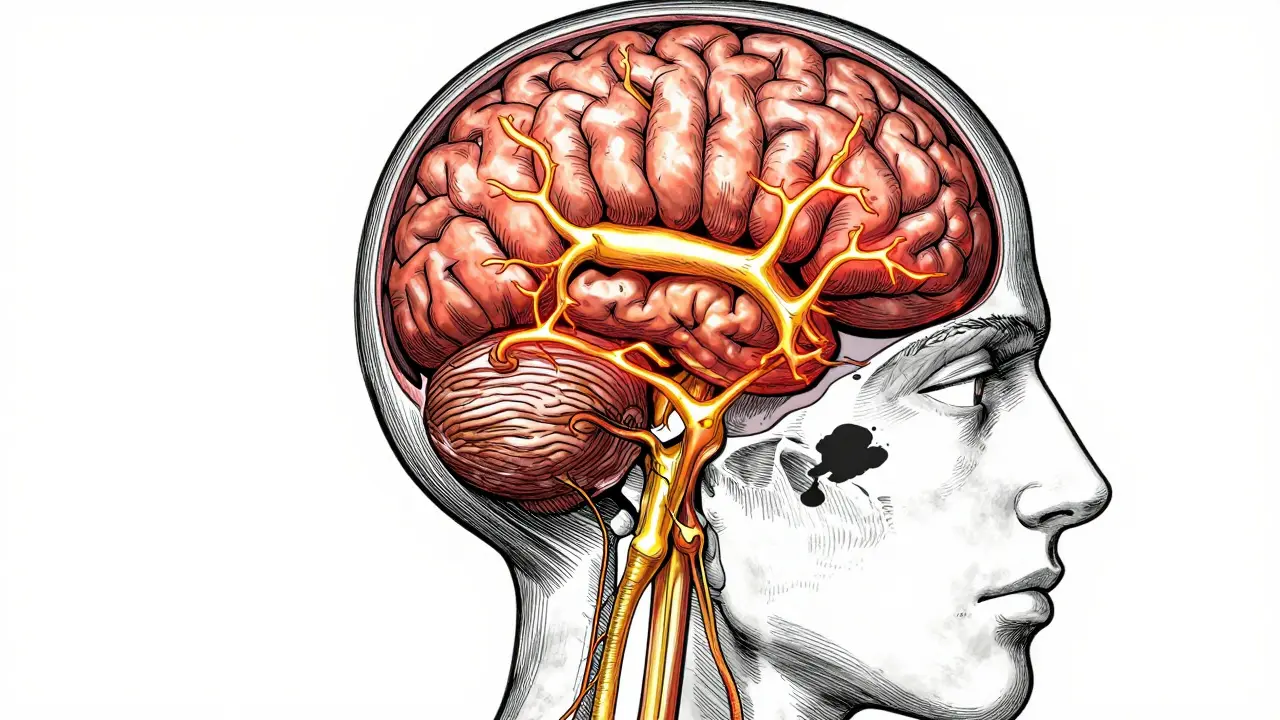
The most common sign of intracranial hypertension is a severe headache, reported by up to 95% of patients. However, these aren't your typical dull aches. Patients often describe them as "thunderclap" headaches that feel significantly worse when lying down or straining. This happens because the Cerebrospinal Fluid (CSF) is the clear liquid that cushions the brain and spinal cord is under too much pressure, and gravity shifts that pressure when you change positions.
The second major warning sign is visual disturbance. You might experience "transient visual obscurations," which is a medical way of saying your vision momentarily dims or blacks out, usually for 5 to 15 seconds. If you notice a "graying out" of your sight or a loss of peripheral vision-where you stop seeing things on the sides-you are in a critical window. In some pediatric cases, vision loss can even start before the headaches begin, making regular eye exams vital for children on growth hormones.
Common Medication Triggers
Not every drug causes this reaction, but a few specific classes are notorious for disrupting the balance of fluid in the brain. The most frequent culprits include:
- Tetracycline Antibiotics: Minocycline is a common trigger, often used for acne or rosacea. It is implicated in about 20% of medication-induced cases, with symptoms usually appearing 1 to 6 months after you start the drug.
- Vitamin A Derivatives: Isotretinoin (often known by the brand name Accutane) is used for severe acne. This is one of the most aggressive triggers, with visual field defects appearing in some patients within just two weeks of starting treatment.
- Hormone Therapies: Growth hormone treatments can trigger this in children, requiring strict monitoring of the eyes every three months.
- Steroid Withdrawal: Interestingly, it isn't always the drug itself, but the act of stopping it. Corticosteroid withdrawal can cause a sudden spike in brain pressure 1 to 3 weeks after the medication is discontinued.
| Medication | Typical Onset | Risk Level for Vision Loss | Common Patient Profile |
|---|---|---|---|
| Minocycline | 1-6 Months | Moderate | Females aged 15-25 |
| Isotretinoin | 4-8 Weeks | High (Rapid Progression) | Teenagers/Adults with severe acne |
| Growth Hormones | Variable | Moderate | Pediatric patients |
| Steroid Withdrawal | 1-3 Weeks | Very High | Adults across various age groups |
How Doctors Diagnose the Pressure
Because the symptoms look like a brain tumor on the surface, doctors have to rule out actual growths first. If the brain scans are clear, the gold standard for diagnosis is a Lumbar Puncture is a procedure where a needle is inserted into the lower back to measure the pressure of the cerebrospinal fluid . A normal pressure range is between 70 and 180 mm H2O. In medication-induced cases, the pressure often exceeds 250 mm H2O.
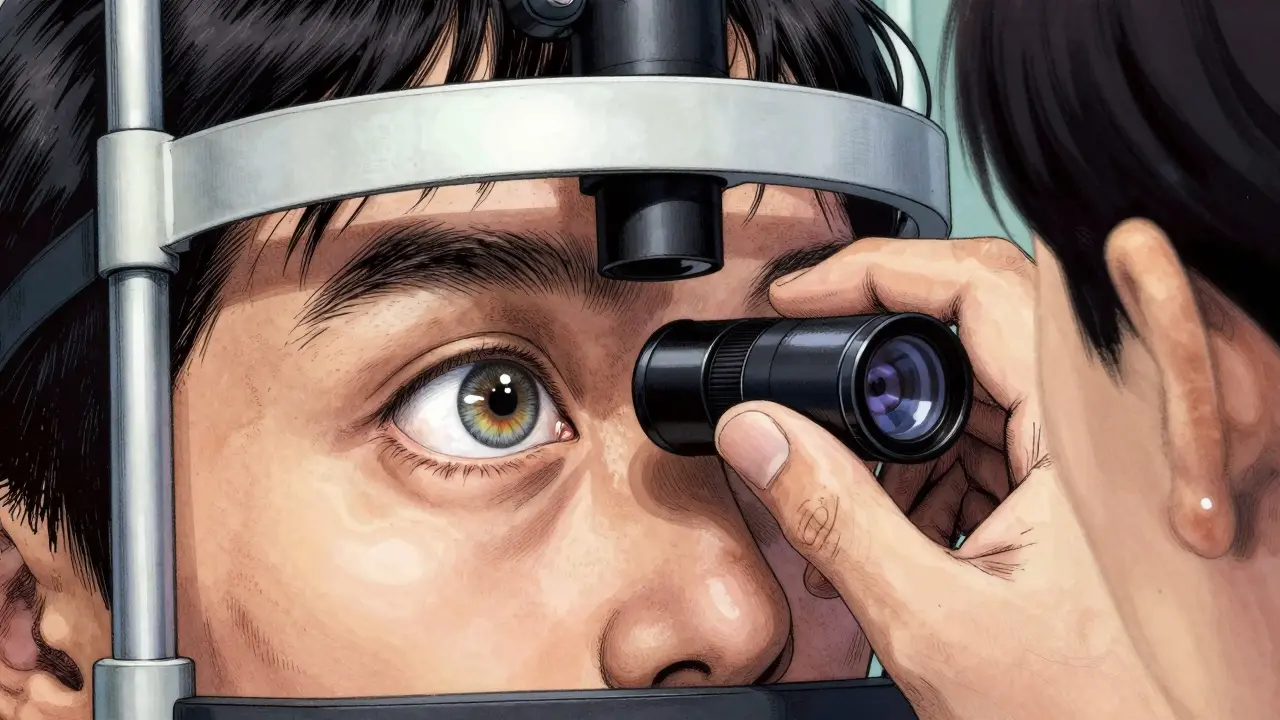
Neurologists also use Optical Coherence Tomography (OCT), which is a non-invasive imaging test that measures the thickness of the retinal nerve fiber layer. If that layer thickens by 15-20 microns in a week, it's a huge red flag that the pressure in the skull is pushing against the back of the eye (a condition called papilledema).
The Path to Recovery: Stopping the Trigger
The good news is that unlike the idiopathic version of this condition-which can be a lifelong struggle-medication-induced IIH often resolves once the offending drug is removed. Most patients see their symptoms disappear within 4 to 12 weeks after stopping the medication.
However, simply stopping the drug isn't always enough if the pressure is dangerously high. Doctors may prescribe Acetazolamide, a medication that helps reduce the production of fluid in the brain. Recent clinical trials have also introduced newer options like venglustat, which may be more effective at lowering intraocular pressure than older treatments.
One critical warning: if you are taking two trigger drugs at once-for example, both minocycline and isotretinoin for acne-your risk of developing this condition jumps more than seven-fold. This "perfect storm" can lead to vision loss much faster than a single medication would.
Avoiding Permanent Damage
The real tragedy of this condition is that it is preventable. Permanent peripheral vision loss occurs in about 5-10% of untreated cases. This usually happens because the diagnosis was delayed; many people spend weeks or months being told they have "stress headaches" before a doctor actually checks the back of their eye for swelling.
If you are on any of the medications mentioned above and you feel a new, strange headache that gets worse when you lie down, don't wait for your next scheduled appointment. Demand a fundoscopic exam (where the doctor looks at your retina) or a visual field test. Catching the pressure spike early is the only way to guarantee you won't face a lifelong visual impairment.
Can the vision loss from Pseudotumor Cerebri be reversed?
In many cases, yes. If the pressure is reduced quickly through medication discontinuation and the use of drugs like acetazolamide, vision can return to normal. However, if the optic nerve is damaged for too long, some peripheral vision loss may become permanent.
How long does it take for headaches to go away after stopping the drug?
While visual symptoms often improve quickly, headaches can be more stubborn. Some patients report full resolution within 4 to 12 weeks, but others may experience lingering head pain for several months after the medication is gone.
Is it common for doctors to misdiagnose this as a migraine?
Yes, unfortunately. Studies suggest that up to 70% of primary care physicians initially misdiagnose medication-induced IIH as migraines or sinusitis because the headache is the most prominent symptom.
Which medication is the most dangerous for vision?
Isotretinoin is noted for being the most rapidly progressive, with visual field defects appearing very quickly. However, corticosteroid withdrawal is linked to the highest percentage of permanent vision loss in some clinical reviews.
Do I need a brain scan if I have these symptoms?
Yes. Because the symptoms mimic a brain tumor, an MRI or CT scan is necessary to ensure there is no physical mass or blockage in the brain before diagnosing Pseudotumor Cerebri.